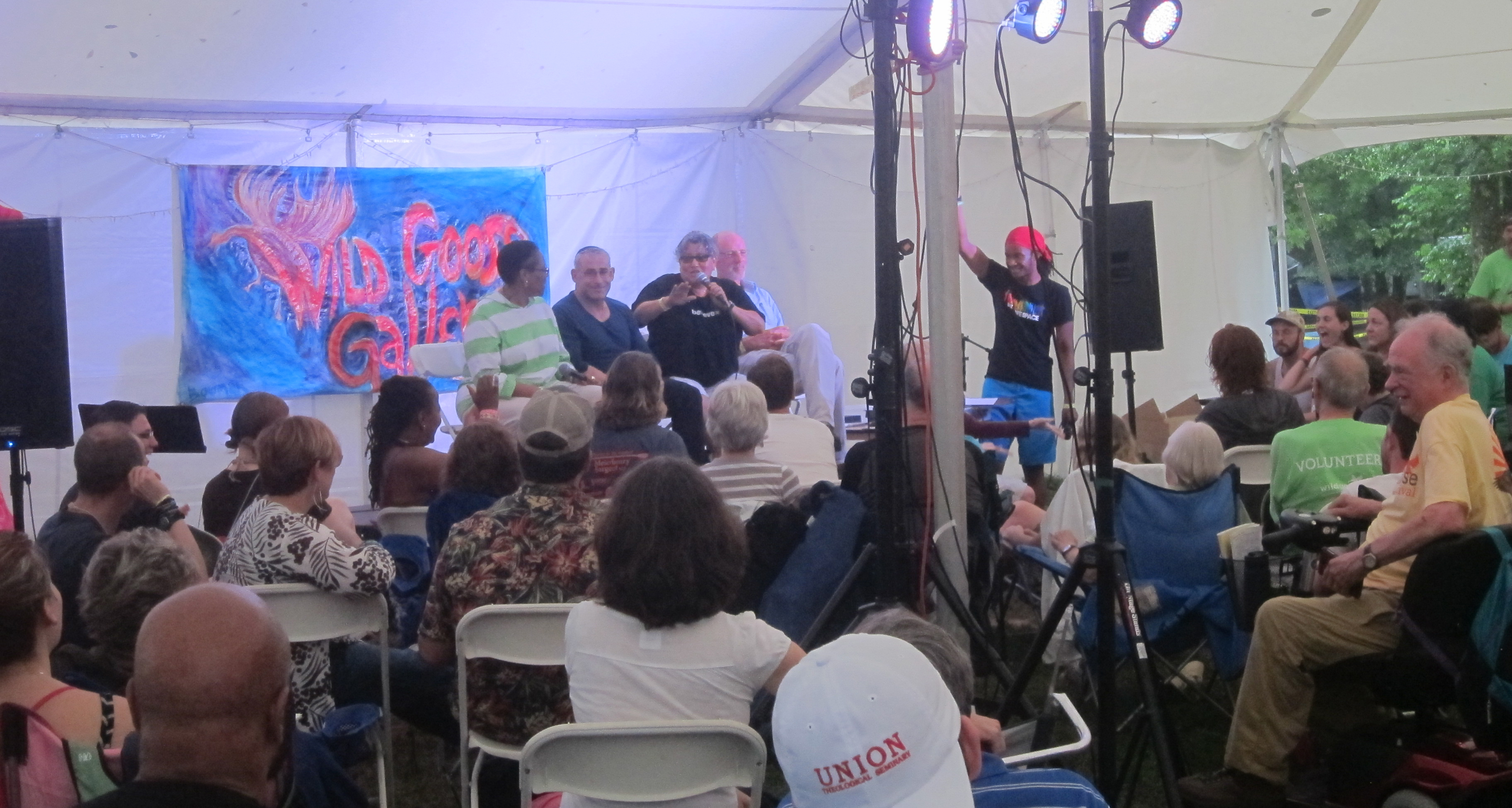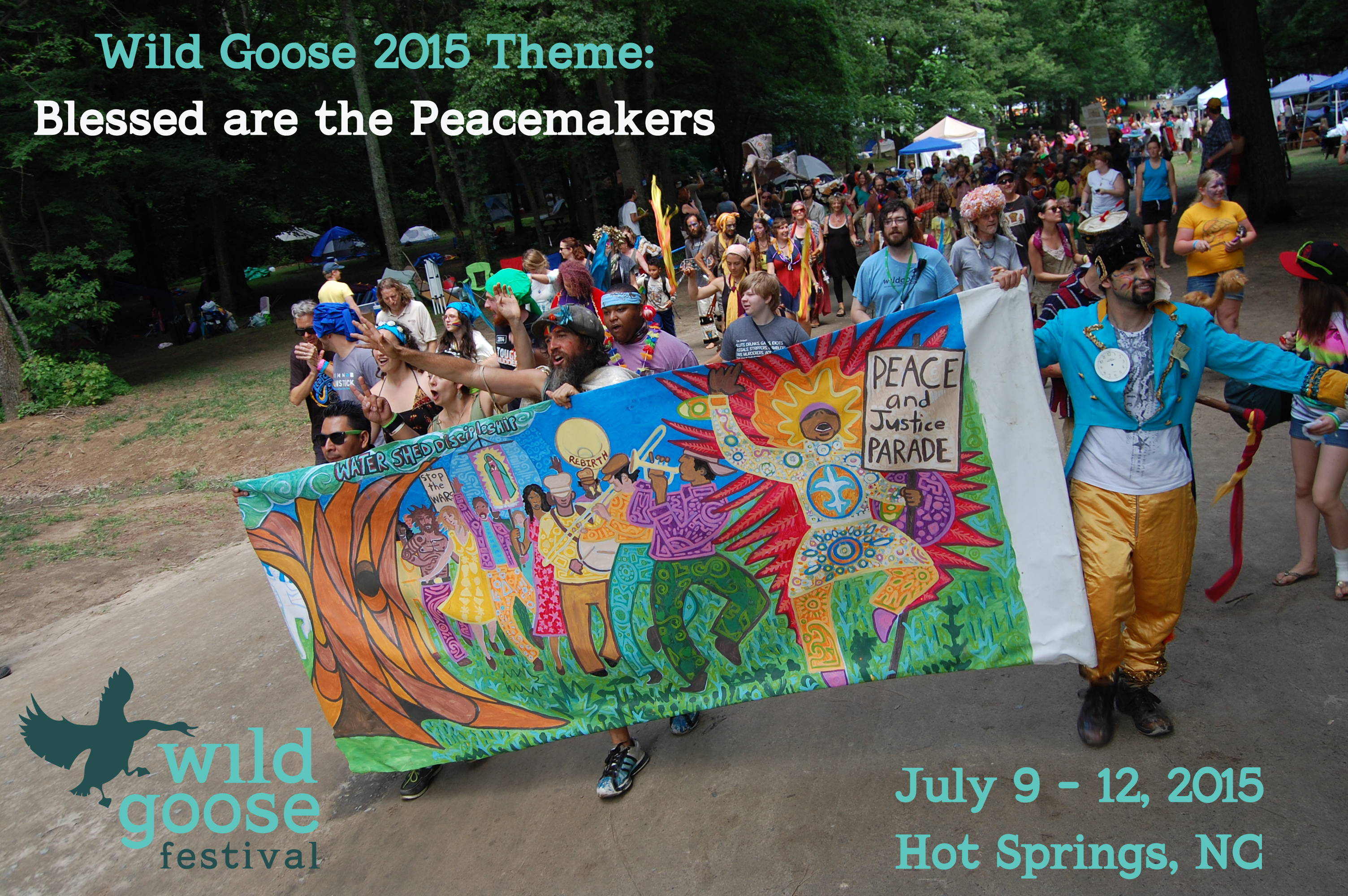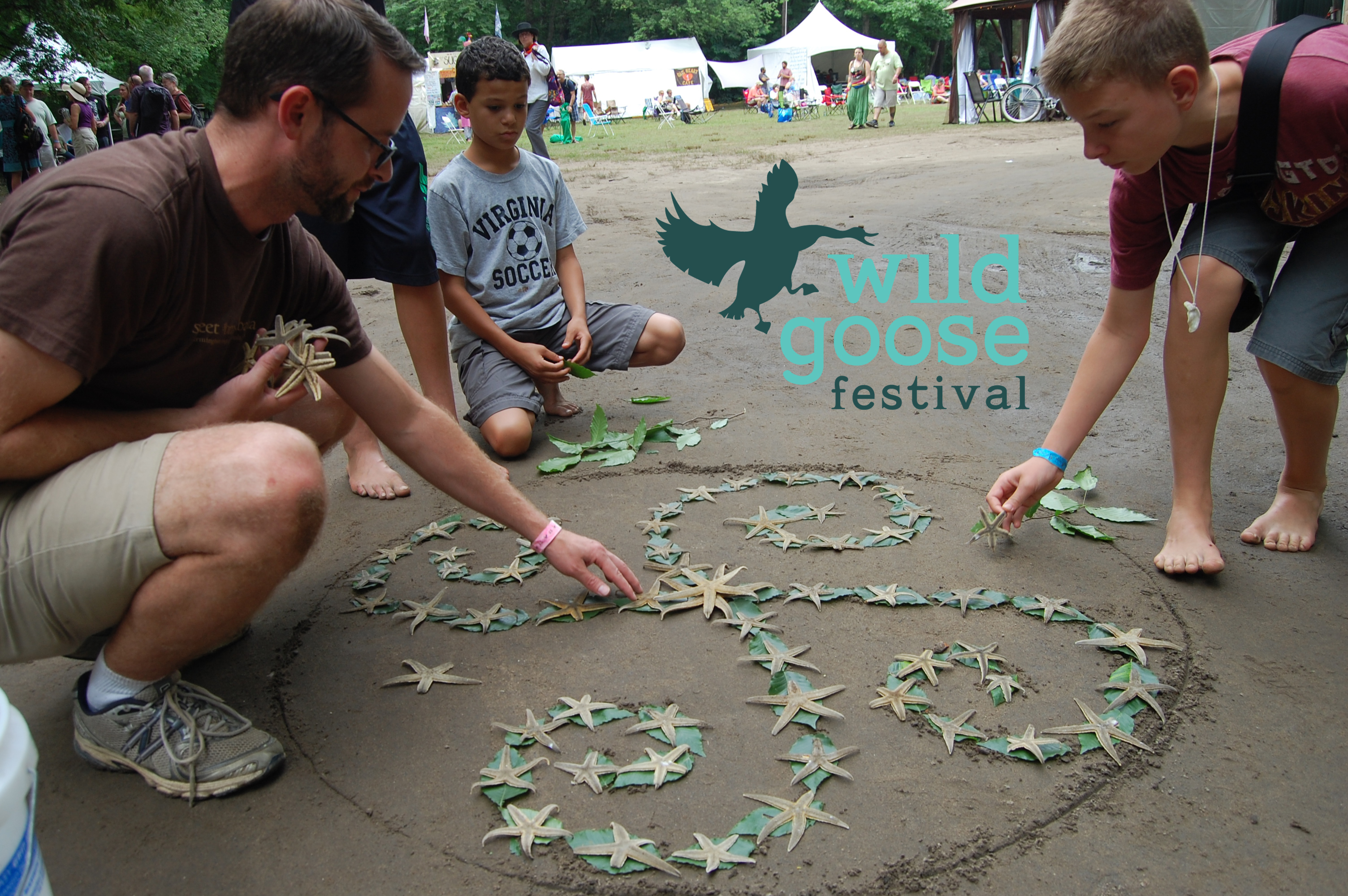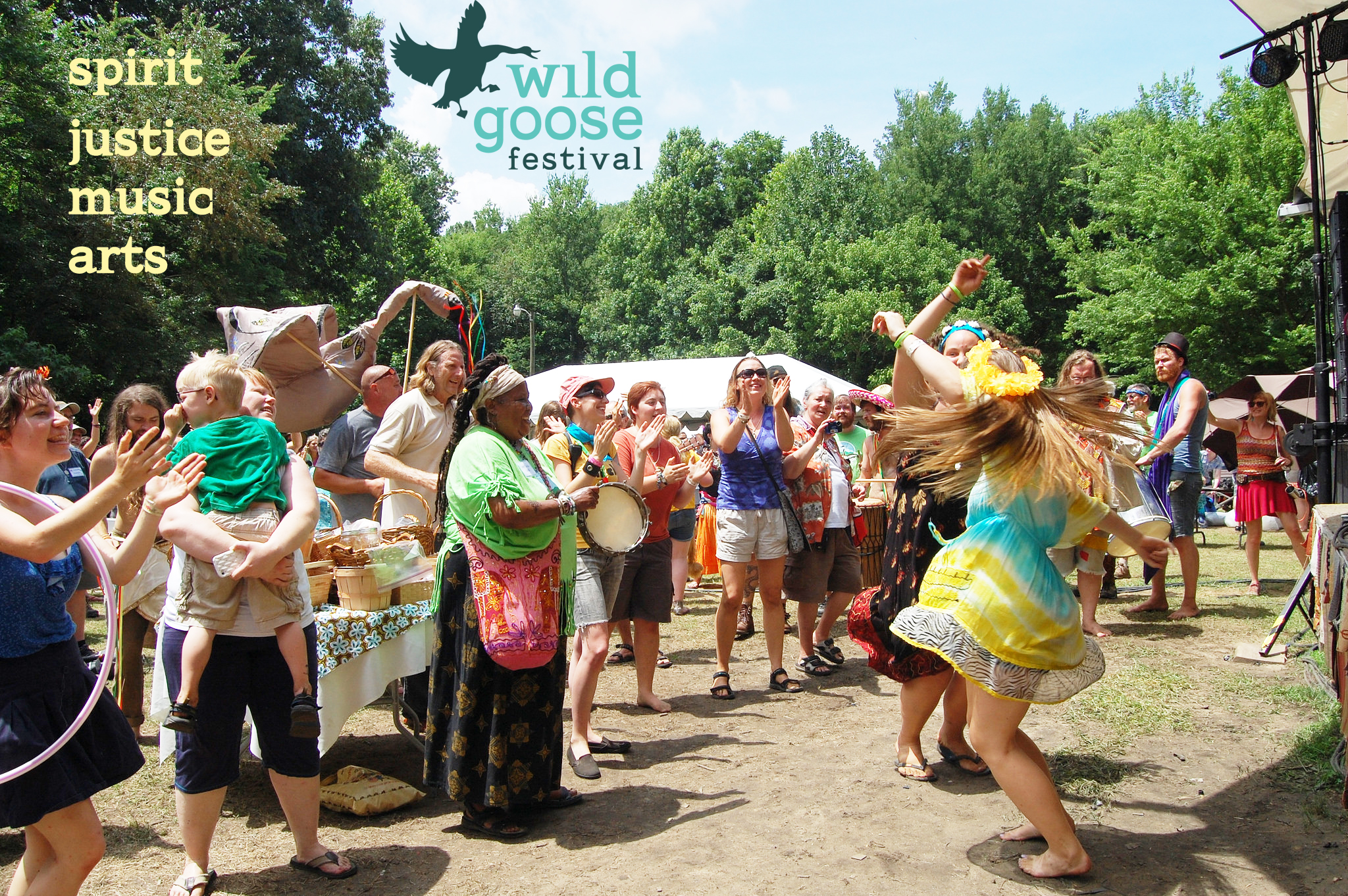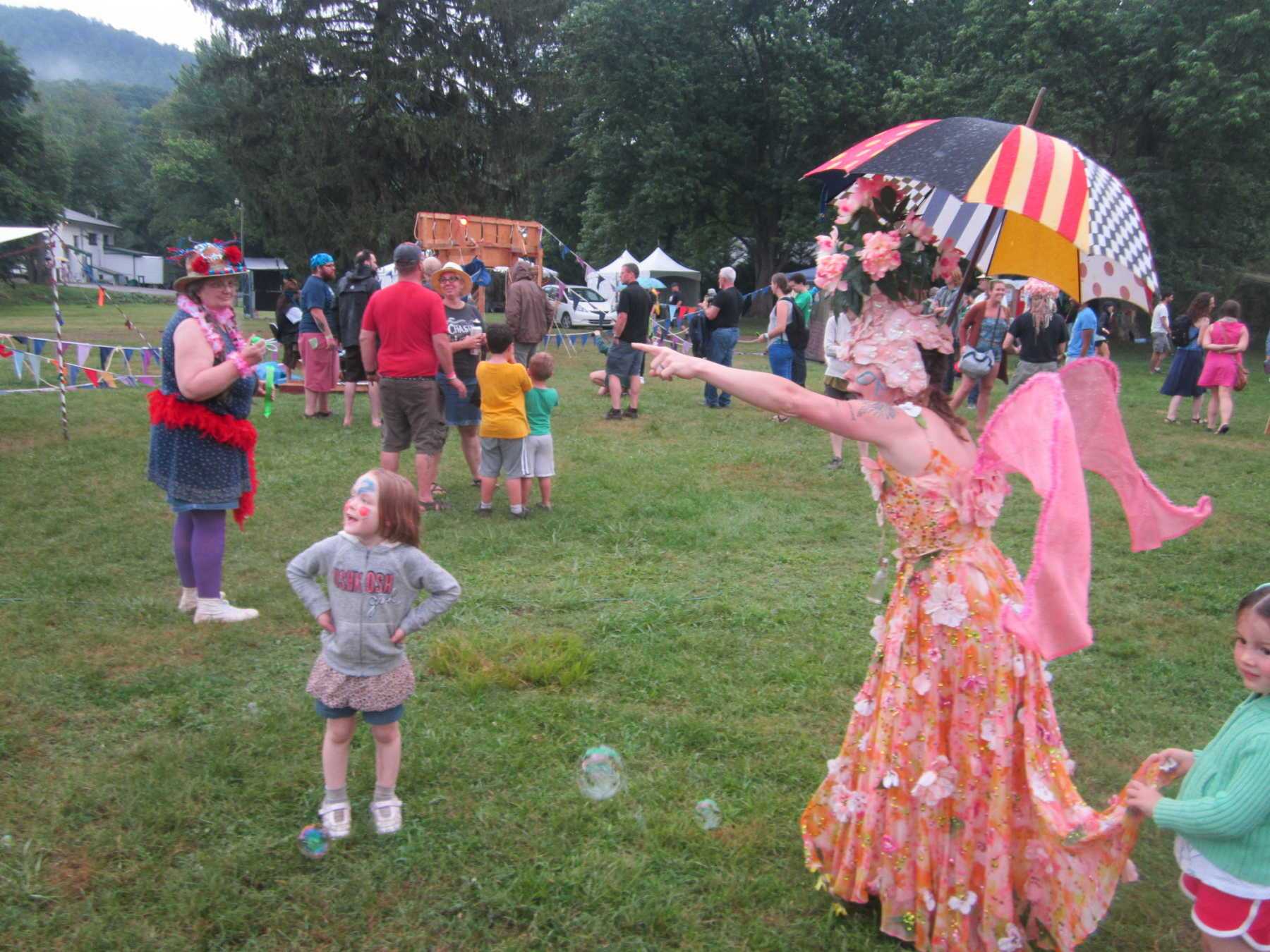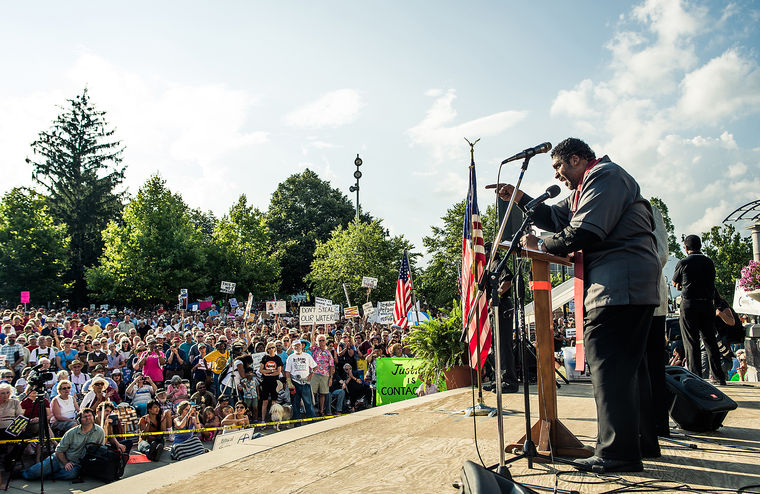
The mornings are growing cooler as summer winds to a close, but your thoughts and experiences at #WGFest15 continue to burn and blaze. As the flock ruminates, here is a second installment of everything that is on your mind.
Read, think, share and repeat.
(You can find the first blog roundup here.)
WHAT IS THE WILD GOOSE?
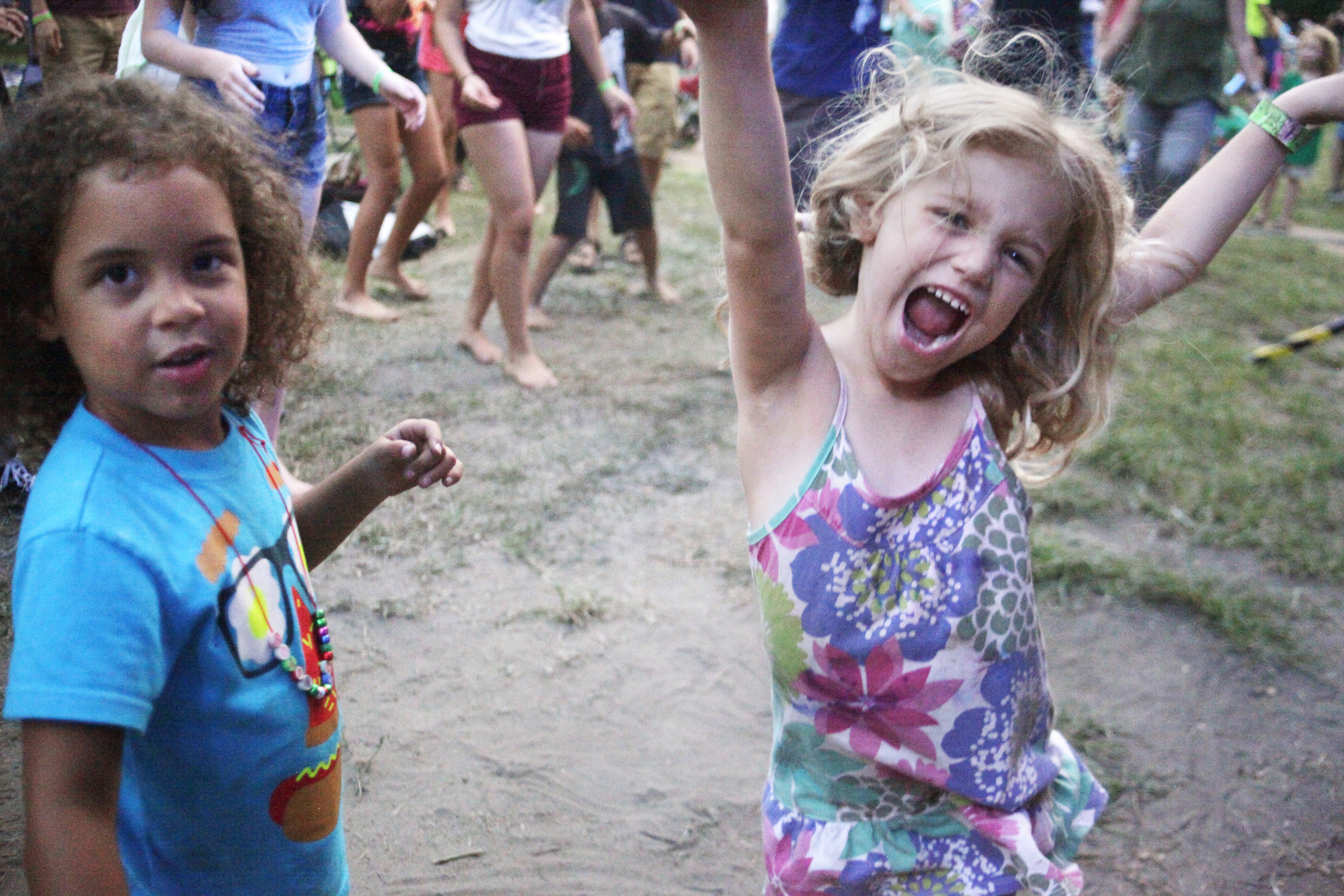
“…liturgies abound. Some of them were rather traditional. The Episcopal tent, for example, held Compline services every night. They also broke out of the mold and hosted a songwriter circle and an agape feast. The Goose is like that.”
“In many ways, faith for me is a slippery fish. Whenever I seem to get a firm grip on belief, something happens in my life that makes truth squirt out of my hands. Because of this history, I enjoy talking with people about controversial topics, especially people I don’t agree with. However, with all the news about confederate flags, marriage equality, and Obamacare, I find it hard to have safe conversations with almost anyone of faith. That is what The Goose is becoming for me. A safe place to explore, be vulnerable, and pursue truth, that slippery fish that fights my desire to keep God in my grasp and finite, not the multi-faceted, infinite being that powers my world.”
“I lie in the French Broad River of North Carolina in early July and expose my palms announcing, pleading really, ‘Open my wounds to grace and reveal God’s glory!’. I really need a God with open wounds like mine.”
— Emerging Voices, Anita Brown
I couldn’t believe it, I had become the fidgety kid kicking the pew and I had successfully upset the status quo. The status quo at the WILD Goose?!?!?! Anger kept me from an appropriate engagement so I packed my things and left to ruminate.
Voices of the Wild Goose Festival
“The Holy Spirit, the Wild Goose, the Wind that formed all things out of chaos and called them good, leads this celebration. The Wind blows where it will with power like the twister with tongues of fire at Pentecost. No walls can trap this Wind. No laws can cage this Bird. No bigotry can quiet this crowd singing love.”
A NEW KIND OF CHRISTIANITY
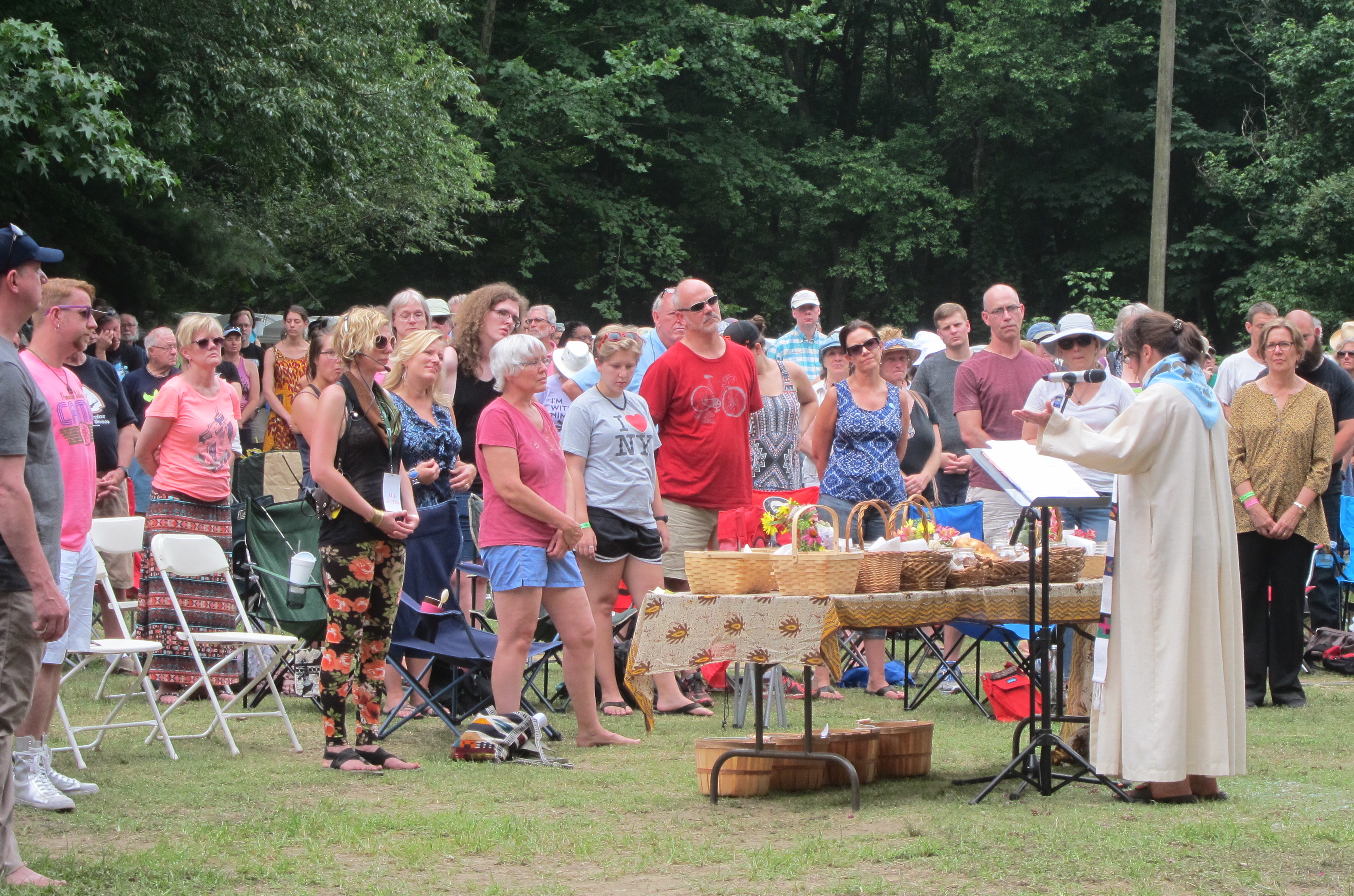
Scaring the Hell Out of Christians
“For me, this is what the Christian faith is all about: restoration. Restoring our souls, restoring our connection with creation and with our Creator, restoring our relationships with other humans — even restoring a healthy relationship with death. All reasons for hope.
Sadly, modern Christianity often leads people away from a sense of loving restoration and into a land of judgement, contempt, and fear — fear of God, fear of hell, and fear of people who think or believe differently — which tragically results in many professed Christians working against justice because they fear empowering “the other” and must defend “their” faith from attack, as if God needs to be protected from dangerous outsiders.”
— Melanie
“The Wild Goose Festival is home to a lot of people who are wondering where God will live next. Some of us have big plans for building houses for God, and moving the divine presence right in so that we can have ready access. But the very metaphor of the wild goose evokes the myriad ways in which God cannot be domesticated.”
— LECTIO
“Underneath the fuchsia, violet, green and blue French braids, the spiky mohawks, the luxurious beards, the shaved heads and the dreadlocks…there’s something stirring within and among the gathered ones at the Wild Goose Festival. It’s not the Spiritual But Not Religious crowd. And it’s not the Nones, the Unaffilated or the Dones.
It’s something different. It’s what I’m calling the “New Revised Wild Goose Version” (NRWGV) of Christianity… I did the math and I’ve preached at least 400 sermons. I know some things about the Bible. But the way that Mark Charles, a Navajo activist and educator, talked about how white settlers in the Americas lacked a “land covenant” with God to guide our relationship, or the way Bree Newsome talked about how Jesus worked for peace, not order, or how Tony Campolo talked about the love of Jesus moved in his heart to advocate for GLBT persons in the evangelical movement—literally, OMG.”
“After being in ministry for so many decades; fulfilling almost every role a local church could offer (from youth leader, young adult leader, worship leader, choir director, crisis counseling, curriculum and Bible study author, senior pastor and church planter) and in most every form of church expression (community churches, house churches, alternative churches) – I found myself so hurt and damaged by shrapnel of this implosion that I put myself in exile. Self-imposed exile.
…
Little did I know that THE Wild Goose, Herself, was orchestrating something that was crucial to my healing … and little did I know what excruciating pain I was about to endure.”
Lithium and a Prayer: A Few Thoughts on Mental Illness, Medication, and Spirituality
“Ultimately, we’ll need to do the work of going into our darkness, of poking around in it. Whether that’s a matter of spiritual direction or some other practice of faith, it’s only by going in and through that we can discover our true selves and begin to work out what it is that we are called to be.”
BONUSES
Live shows are always a blast, but the LIVE CultureCast at Wild Goose festival was a new kinda awesome. Hear from Lisa and Michael Gungor, Romal Tune, Tony Kriz, Leroy Barber, Christian Piatt, Josh Linton and Micky Scottbey Jones, among others!
Here are twelve essential recent / forthcoming books by authors speaking at Wild Goose… From Forward Together to Redeeming Sex.
— The Englewood Review of Books

It’s been nearly a month but the Wild Goose Festival is anything but over. Our flock is no longer gathered on the banks of the French Broad River. But, we’re still thinking, learning, enacting our faith and connecting across the country.
Which songs are still stuck in your head?
What art has poured from your fingers?
Are there any new ideas that just won’t dislodge itself from your mind?
The Wild Goose is more than a festival. It’s a movement.
So, let’s start sharing what we’ve learned.
Below are links to blog posts by fellow goosers. Check them out. Share them with your friends. Comment. Let’s keep the community growing.
In the mean time, we plan to create a second round-up in two weeks, so be sure to send your blog posts, art, and reflections inspired by Wild Goose to [email protected] or comment with a link below.
COMMUNITY

“He sat in the front seat of the rickety golf cart. “This your first time to the Goose?”
I swear, his white beard was past the nipple line.
“Yes,” we tittered. My knuckles were tensing around the seat.
“Well spread your wings and let the Holy Spirit make you fly!” He lifted an arm out of the cart for emphasis. I worried the cart would tip, that we’d splatter on the trodden dirt of the campground.”
“Whether it was the sounds of impromptu jam sessions singing praise for the day’s blessings, the sights of young people freely expressing their joy with dance, the pop of the embers exploding into the night air as we journeyed into a Celtic ancestor meditation, or inhaling the sweet exuberance of a burgeoning relationship of a dear friend, each moment was manna for the soul.”
Hopeful dreamers, dirt covered hippies, and radical Jesus followers
“On Friday afternoon, just as the sun was really starting to heat things up I found myself sitting on a large rock in the middle of the French Broad river surrounded by cairns erected by other festival goers as a form of centering meditation.”
Despair has become too automatic a reaction lately, facing environmental apathy and the egregious civil rights attacks that won’t stop coming. But standing side by side with hundreds of kind, intelligent justice-seekers has renewed my faith in humanity.
“And so, last week, as I stood in front of the main stage at the Wild Goose Festival listening toGungor – a group whose music has been impacting me for years – I was struck dumb when I heard them explain their new song, Light.”
—Michelle McConnell, Clearing Webs From The Hovel
Homosexual relationships are not about sex…cue eyeroll.
“But, when Betsy and I walked hand-in-hand through the Wild Goose campground, all I felt was radiating, unqualified, unapologetic joy. In the spirit-filled bubble that is The Goose, we felt loved, safe and free to live into our burgeoning love. When we ventured beyond the delicate membrane of The Goose, wandering through the little town of Hot Springs, we became acutely aware of how others might regard our hand-holding.”
ICYMI, BREE NEWSOME WAS THERE….
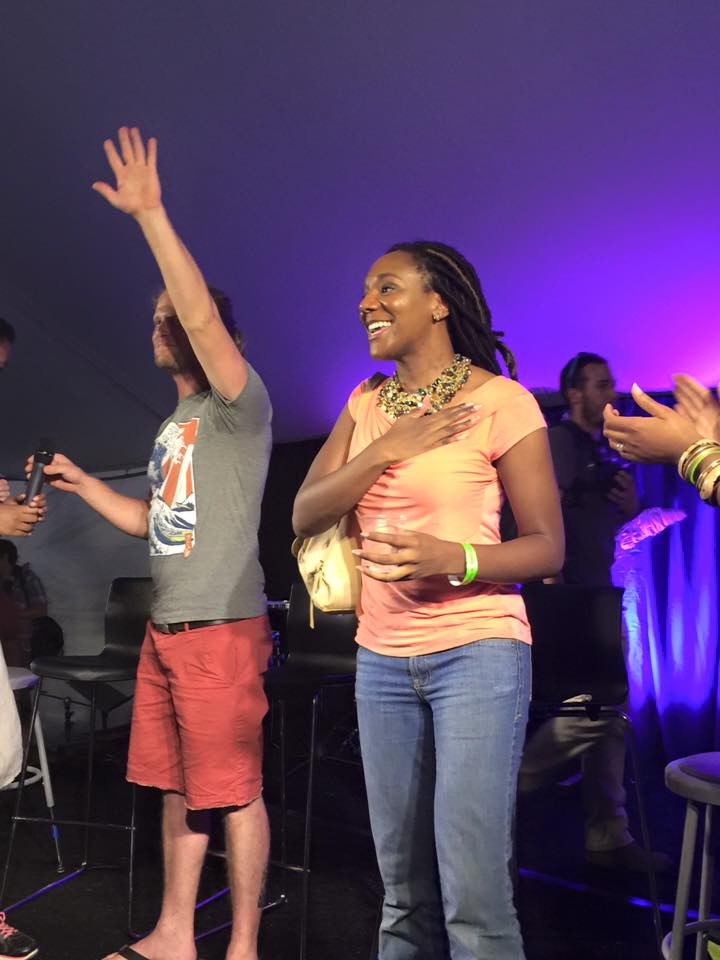 (Before you do anything else, be sure to watch her panel discussion here.)
No One’s Going To Stop Until We’re All Free
“Another Wild Goose speaker of note was the Rev. Traci Blackmon, pastor of Christ the King United Church of Christ in Florissant, MO. Blackmon, a prominent activist and organizer, was appointed to the Ferguson Commission after her early response to the racial tensions that followed the killing of Michael Brown Jr. She was at the festival to preach at Sunday’s closing ceremony and participate in a panel called “Revolutionary Love & Militant Nonviolence.”
After Newsome’s speech, reporters, performers and activists gathered under a small tent behind the stage for a brief press conference and photo op. All fell silent as Blackmon stepped up and embraced Newsome—the two activists meeting for the first time. Blackmon began to cry as she held onto Newsome. “Thank you,” she whispered.“Thank you for snatching down that flag. Thank you.”
Newsome replied, “Y’all lit my fire in Ferguson, and no one’s going to stop until we’re all free.”
— Jordan Foltz, Mountain Xpress
“I was a security threat to Bree Newsome at the Wild Goose Festival.”
Maybe I’m an anti-activist. (My book is subtitled, “Some Thoughts on NOT Changing the World.”) We journalists are trained to stand above the fray, to provide some sort of God’s-eye view. But something Newsome’s human step-stool said is sticking in my craw. “As a white Southerner I’m taught to be silent in the face of racism,” said Tyson, who grew up as a Presbyterian.
What is respectable and what is right are two very different things. Your silence is doing violence. As white people, we’re the ones who perpetuate white supremacy. … Even if you lose friends from telling the truth, you’re being held and cherished by God all the time.
Tyson pointed out that the proper, Southern gentleman was also the slaveowner. I wonder if there’s an analogy with us journalist types: What a privilege, what a luxury, to not have to get involved, to not have to feel, if we don’t choose to.
— Jesse James DeConto, Christian Century
The Most Important Thing We Can Learn From Bree Newsome
This begs the question: how do entire situations get made right? How do we pursue wholeness of individuals or communities? Well, I’ll tell you how we don’t get there: we don’t get there by refusing to confront injustice and oppression, or by telling the oppressed to stay calm (the later being something I’ve been guilty of previously, and hereby most contritely repent). However shalom is achieved, the first step is ending oppression, and that means we must name it and confront it– aka, we “agitate, agitate, agitate” as the abolitionists used to say.
LESSONS LEARNED

“Do y’all do blessings and shit?”
I asked it shyly, unsure of the proper etiquette (even though the sign in front of the white tent advertised all manner of blessings available). I hoped the casual and shit would mask how badly I wanted to be blessed, how I’d felt my heart pull me toward this corner of the campground over and over all weekend.
I said it with a smile, but what my heart whispered fiercely was “I won’t let you go until you bless me.”
Working for the Economic Flourishing of our Places
One comment that was driven home by this panel was that churches should be involved in the work of economic development in their particular places. Economic development, for those who might not be familiar with the term, is “the sustained, concerted actions of policy makers and communities that promote the standard of living and economic health of a specific area.” (Wikipedia) This idea that churches should be doing this kind of work resonated with me, as Englewood Christian Church, my church on the urban Near Eastside of Indianapolis, has been engaged in economic development for over a decade. We didn’t set out to do economic development, but stumbled into it as a result of seeking to be faithful in our neighborhood and to bear witness to the healing and flourishing that God intends for all places.
—C. Christopher Smith, Sojourners
5 Things I love about wild goose
We finally made it to Wild Goose. After the last four years saying “I really wish we could go,” which became “let’s give it a try,” which became “we’ll go next year.” It finally became “we’re going!”
Why I will not pray for unity.
Peacekeeping is a job for the loud.
For those who can command a room.
For those who can confidently stride
to the front of a room and declare
“Can’t we all just get along?”
…
Power prays loudly for unity.
But some are peacemakers.
Makers. Creators.
Who call forth from the deep something that had not been before.
Peacemakers are bold. They are confident. But not always loud.
Because even strong voices can sound small from the back of the room.
From the margins.

Leah Gunning Francis
Leah Gunning Francis (who spoke at Wild Goose Festival 2015) is more than the author of Ferguson and Faith: Sparking Leadership and Awakening Community, she is also an activist and a passionate champion for changing the public narrative about young black men.
When the tragic death of Michael Brown occurred in Ferguson, Missouri, on August 9, 2014, St. Louis-based Chalice Press needed to be part of a positive and justice-seeking response. In partnership with the Forum for Theological Exploration (FTE), we were honored to work with Dr. Gunning Francis, who went out and interviewed more than two dozen faith leaders and young activists to tell the behind-the-scenes story of what happened in the days and months following the event that propelled the #BlackLivesMatter movement on the national stage.
As Shane Claiborne has called it, Ferguson and Faith is “an important book … a theological memoir of a movement.”
In his foreword to the book, Jim Wallis, founder and president of Sojourners, writes,
I believe that if the young Ferguson leaders hadn’t gotten up day after day and gone to the streets night after night, and some courageous clergy hadn’t joined them there and spoken out in their community, there might never have been a historic national commission on policing or a damning Department of Justice report on the Ferguson Police Department — and we would not be at the beginning of a new national conversation on reforming the criminal justice system. But it is only the beginning …
With new reports of police shootings in the news nearly every day, we know Wallis is right, and it is our hope that this book will be part of sparking the national conversation among people and communities of faith as to how to faithfully respond. Because, as Dr. Gunning Francis writes in the book, “There is a Ferguson near you.”
Order Ferguson and Faith online now!
Watch and share this video message from Ferguson and Faith author Leah Gunning Francis!
Other Wild Goose 2015 speakers whose books are available from Chalice Press:
Forward Together by Rev. William Barber II
Pre-Post-Racial America by Sandhya Rani Jha
Blessed Are The Crazy by Sarah Griffith Lund
Coming Home by Zachary Moon
PregMANcy by Christian Piatt
Sacred Wounds by Teresa B Pasquale
 There are more ways to explore peacemaking than just through music and speaking. This year, our theme will permeate through every segment of the festival, including the visual arts. In fact, there are some ways that peace can only be explored through art.
“In curating the theme Blessed are the Peacemakers, we noticed that peacemaking included everything from making peace, to reconciling worlds to being prophetic in the world about what is at peace or at war,” explains Troy Bronsink. Troy is this year’s art content leader for the festival.
So, what will you see at Wild Goose this year? Here’s a small sampler.
1. Stations of the Cross: Mental Illness
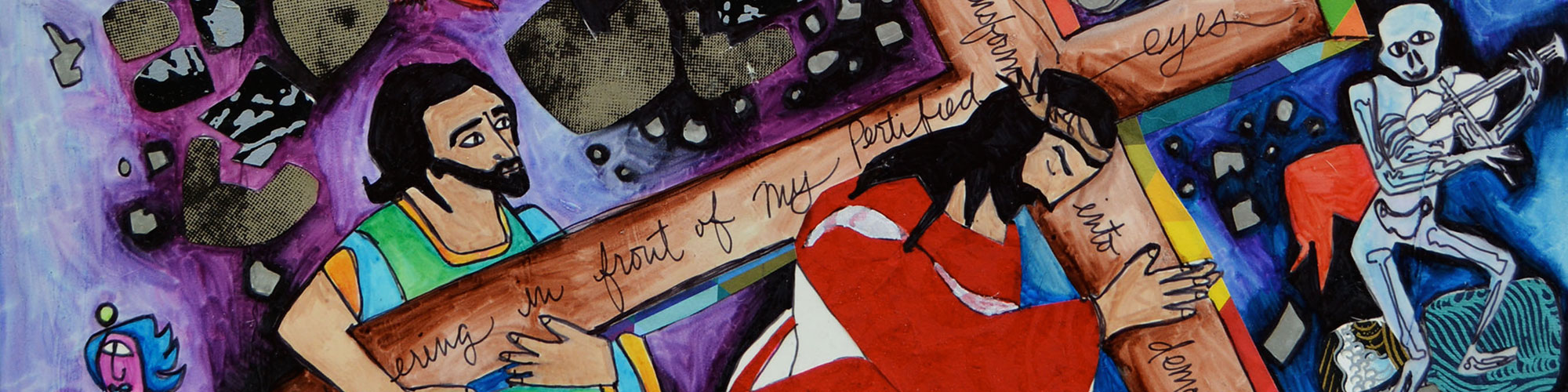 As you walk around the the festival you’ll notice Mary Button’s installation, Stations of the Cross: Mental Illness. Take some time so see how her artwork both tells a story and creates space for new encounters with what it means to be at peace, long for peace, and make peace.
2. Live Art!
You’ll also see the work of Dan Nelson who will be painting the festival at the Live Art Tent. Take time to talk with him about your experience of peacemaking as he listens for the voice of the Goose and depicts this powerful weekend and burgeoning community through his art.
3. The Art Tent Gallery & Beyond
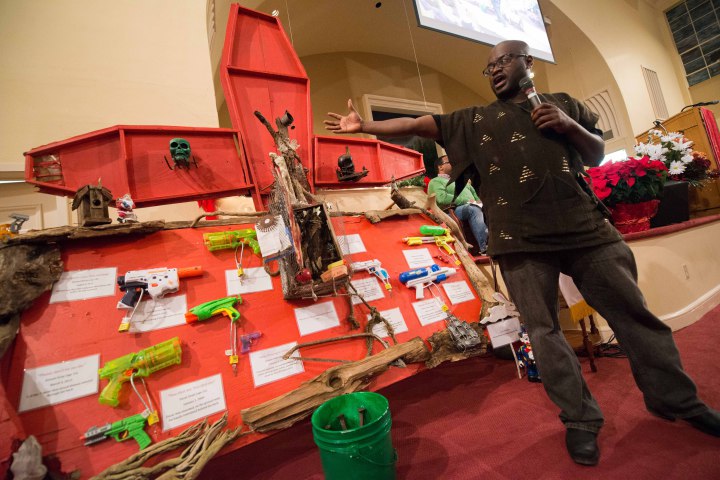 There will be work from at least five artists in the Art Tent Gallery with very different perspectives and approaches as well as hosts who can walk you through an experience of that work. Stefan Gustafsson and Fred Wise are two of the artists that will be featured there. Stefan is from Sweden and his works involve lengthy processes of mingling minerals and pigments to explore reconciliation and differentiation. Contrast that with the work of Fred whose watercolor and oil paintings depict stories of struggle and mystery. Art will appear around the festival as well. For example, DeWayne Barton, pictured above, will have a sculpture on display somewhere on the grounds.
4. Maker’s Space
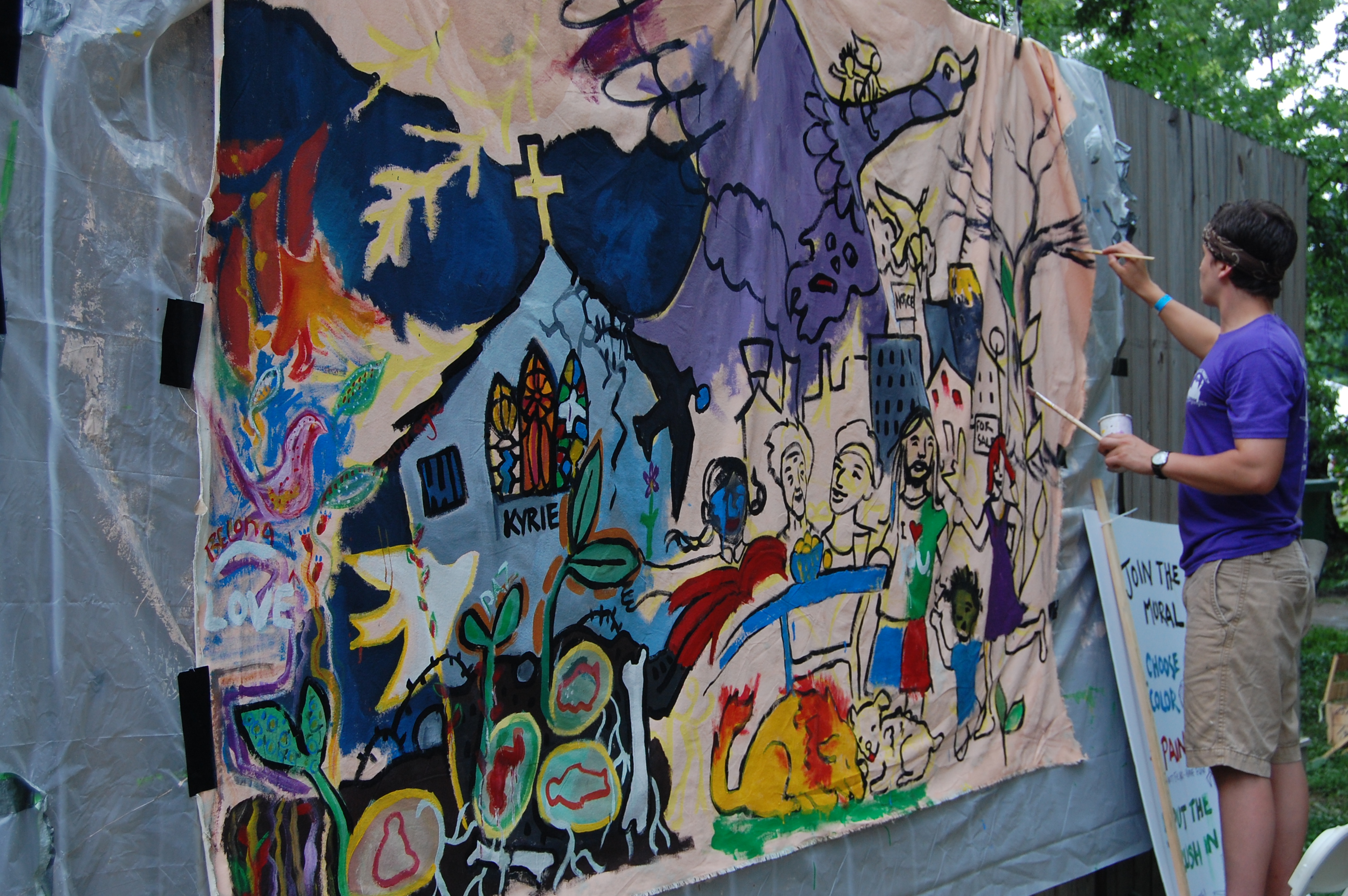 We’ll have a maker’s space for you to participate in making materials for the Art Liturgy on Saturday at 2 pm, which will include a large acoustic stringed instrument orchestra. So bring your guitar or banjo if you have it!
5. Thoughtful Discussions
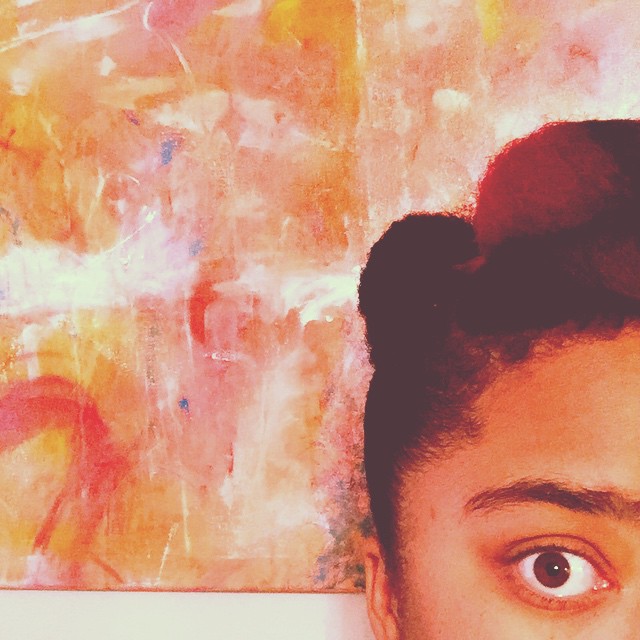
This year, author and long time friend of the Goose, Frank Schaeffer, will be showing some of his recent paintings. Also on Saturday, he’ll be in conversation with A’Driane Nieves (pictured above) about the role of our own stories and family’s stories in making and reading art. Nieves’ work is a reflection on her experiences as a mother, a woman of color, someone who has battled with mental illness, and as a minority in the growing liberal city of Austin, Texas, all lived through the perspective of faith. Her work has been featured in regional and national #blacklivesmatter forums and she’ll be including a recent book of works and excerpts from her blog.
6. Art as Spiritual Practice
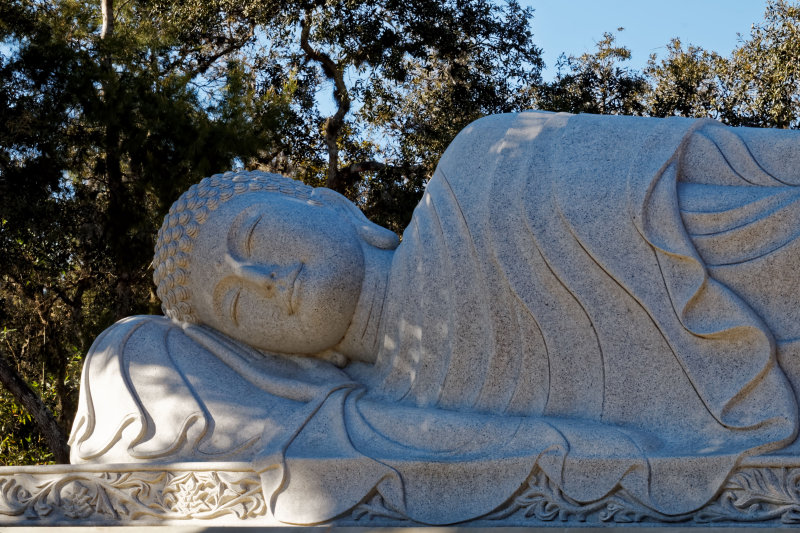 There are other artists showing this year who identify their work as direct spiritual practice. Cassandra Lawrence develops art with worshippers and within worship to enable participants to corporately participate beyond words. Patrick Mahon is a contemplative and student of Merton. (One of his photographs is pictured above.) His photography is intended to cultivate peace within the viewer, calling you not to simply “see” but to be present in the seeing.

Last year was Faithmarks’s first time at Wild Goose. They are coming back and they are bringing a little something special for the Wild Goose flock: tattoos, both permanent and temporary.
FaithMarks is a photographic gallery show exploring the intersection of spirituality and the art of tattoos. Initially conceptualized by St. Marks Church, this inter-denominational, interfaith ministry used models from all over the country. It is an experience meant to take each person on their own spiritual journey. The show provides a non-threatening experience for those who visit, evoking the opportunity for spiritual conversation to flow naturally.
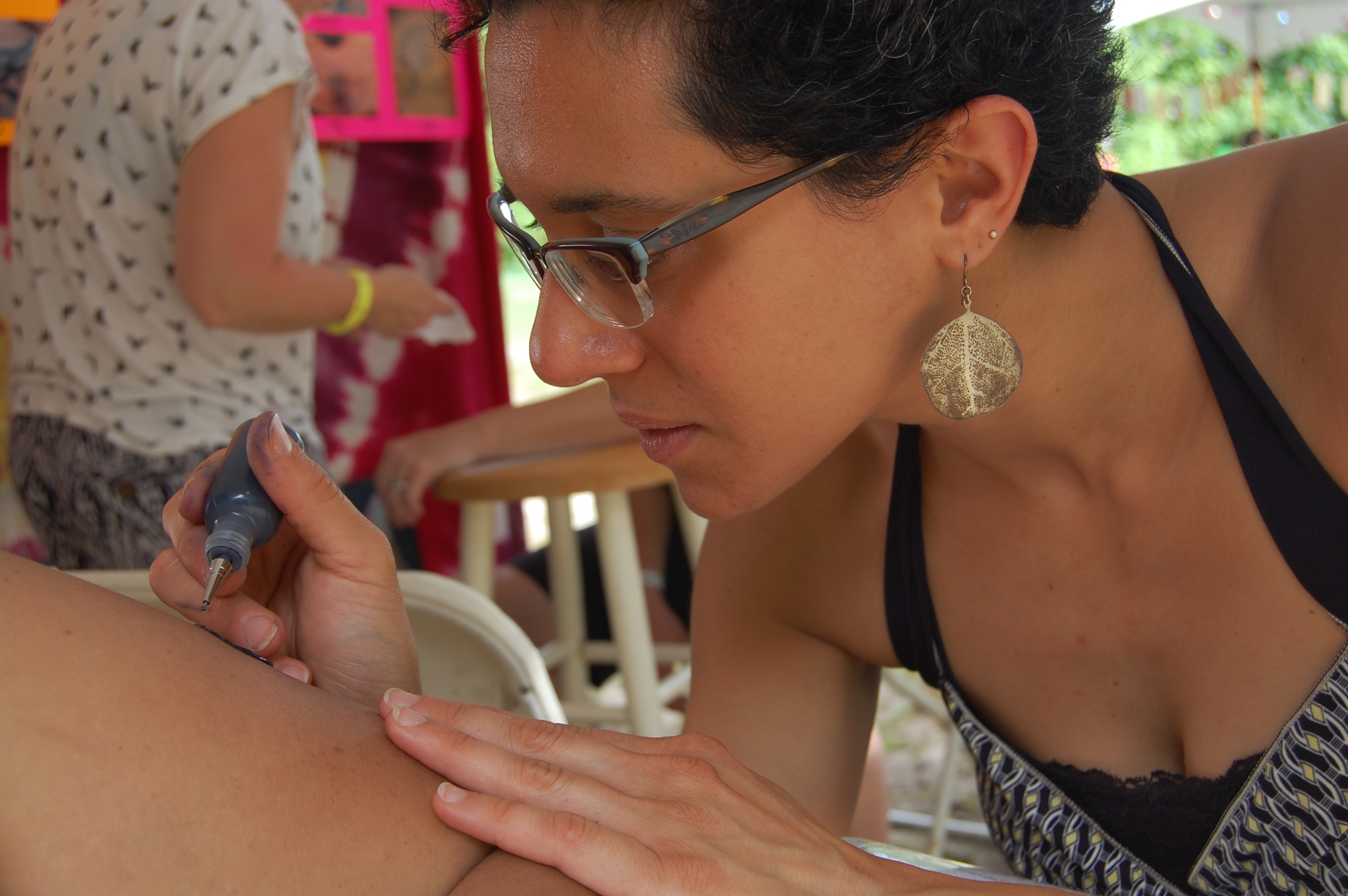 Although founders Carl Greene and Anna Golladay heard the whispers (or far-off honking) of the Goose in the past, last year they finally decided to take the
leap and attend.
“We have been really warmly accepted everywhere we have taken the show,” says Anna. “But, Wild Goose? It is absolutely, hands down, the coolest and most exciting place the show has ever traveled. The warmth and true excitement from folks was palpable.”
The show includes professional photography of tattoos along with the model’s story, explaining why they received it. The blend of the visual and written really sparks spiritual conversations. “The Wild Goose Festival provides a forum for open and honest dialogue,” says Anna, “Something that is encouraged when the Faithmarks show travels other places.”
 This year, seven team members will make the trek from Chattanooga, Tennessee to Hot Springs, North Carolina. They will be bringing a set on new images this year. Last year, Faithmarks consisted of 22 canvases and stories. Anna is excited: “We’ve doubled the number of images and stories! Just because you spent some time with the show last year doesn’t mean that it won’t still be new and fresh in 2015.”
The word seems to be spreading about the tattoos as well. They will have both permanent and temporary tattoo artists with them this year at the Goose.
“I’m not sure I could be any more giddy about this if I tried,” says Anna.
“We’ll soon launch a sign-up for those folks wanting to get a real tattoo during the festival, so keep an eye out! What better way to commemorate your experience than to head home with a Faithmark of your very own?”


This year’s festival will feature an exciting opportunity to “forge peace” in a very literal way highlighting our theme—Blessed are the Peacemakers.
RAWtools, with the help of Tim Coons and Justin Bullis, will be leading two peacemaking liturgies at the Wild Goose Festival next month. The liturgy includes the usual singing, scripture readings and testimonies, but with an added dimension. Together we will also create a physical representation of God’s prophecy in Micah and Isaiah of “beating your swords into plowshares”.
The gun will be disassembled and, using a small furnace, the metal components melted down to create a tool of creation. Romal Tune will be speaking at the PeaceMaker on Gun Violence Liturgy and John Dear at our PeaceMaker on War Liturgy.
 Founder Mike Martin had considered the concept for RAWtools for many years. His anabaptist faith background coupled with experience in the family landscaping business combined to birth the concept. But, it was the Sandy Hook Elementary School shootings in 2012 that propelled him into action.
In 2013, Mike launched the RAWtools at the Justice Conference, held in Philadelphia that year.
“Our goal is to create new narratives of nonviolence and peacemaking, instead of narratives of violence,” says Mike.
Guns used during the liturgy are donated by individuals who no longer want a weapon in their home and sometimes by police officers. Mike hopes to formally partner with police departments, offering a constructive way to dispose of confiscated weapons. “We want to let them know that we’re an option as far as what what we can do with weapons, that we’re an option for police departments or even just for people who are uncomfortable having a gun in their home,” he explains. At the end of the liturgy, the newly made tool is given to someone involved in the service or sold to help fund the work of RAWtools.
 Mike can’t wait to get to Wild Goose this year. The two liturgies being held at the festival are part of the PeaceMaker Tour which was launched this January.
He knows that, in some ways, he’ll be preaching to the choir.
But for Mike, peacemaking is about more than the occasional liturgy; it’s a daily practice.
“It’s living out the witness of Christ, being a listener, loving alongside people,” explains Mike.
“Being a peacemaker is about a lot of little stuff—being in relationship—and not necessarily big, grand, Nobel-Peace-Prize stuff,” he says. The hardest part is having patience and practicing peace toward those with whom we strongly disagree or even dislike. Not that Nobel Peace Prize scale is bad (Nobel Peace Prize nominee John Dear is speaking at our Friday Liturgy.).
In fact, he has a practical suggestion for how to ‘forge peace’ this week.
Have lunch with someone you don’t like to be around, suggests Mike, “an enemy, someone that hits all your pet peeves.”
“To sit down and listen and have lunch with somebody,” says Mike. “That is an act of peacemaking.”

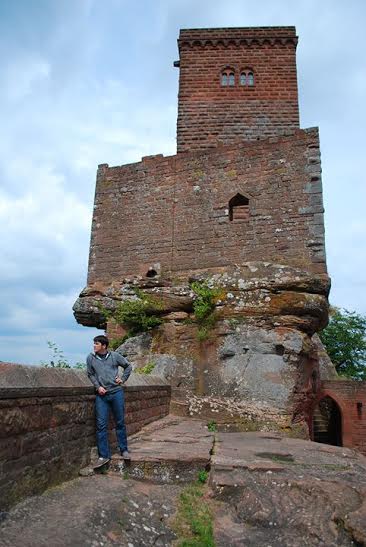
By Andrew Lewis
“What’s the ELCA?”
It’s a question every Lutheran will be asked at some point, at least outside of Minnesota. The Lutheran tradition is, after all, best analogized with a spilled can of alphabet soup. And for those of us who grew up in different traditions, we all sort of wince when we say, “The EVANGELICAL Lutheran Church in America.”
Evangelical: it’s a weighted term and yet it hangs in the air. It carries with it four decades of right-wing politics and quasi-religious rhetoric which taught the US that God is a Republican who uses hurricanes to punish cities and tells presidential candidates to run for office. It conjures pictures of street preachers confidently assuring angry crowds that…well, almost everyone is going to hell. In the popular imagination, evangelicals are door-to-door Jesus salesmen.
But I’m not selling a brand-name faith with an eternal warranty. So when I explain what the ELCA is, I hesitate. Why oh why couldn’t we have picked a less loaded name?
I could give some long explanation about Lutheran history and denominational mergers or a passionate defense of Luther’s original use of the term, both of which explain why we ended up as the ELCA, but there is more to the story. It’s about our identity as Christians. We are, after all, an apostolic Church, sent out to proclaim the euangelium, or Gospel (and the root word for evangelism).
We tend to think of evangelism as spreading the right knowledge of how a person gets to Heaven, as though we are teaching a secret password to an exclusive club. Knock on a door, share the Good News, and leave knowing that you’ve won another soul for Jesus. One more person out of Hell.
But what if we thought of evangelism as inviting people into right relationship with God and, through God, with our sisters and brothers, our neighbors and our enemies? What if evangelism took longer than the few seconds required to hand out a tract? What if we viewed evangelism as accompanying people on their pilgrimage towards God? And what if the Gospel we proclaimed had implications on Earth as well as in Heaven?
The early Church understood evangelism as accompaniment. New Christians were sponsored through a long initiation process which led to the Font and to the Table. They were accompanied through poverty. They were accompanied through prison and martyrdom. This tradition survives, in text if not in practice, through the baptismal liturgies which ask for the entire assembled Body at worship to affirm, on behalf of the entire Church catholic, that they will “support [the newly baptized] and pray for them in their new life in Christ” (Evangelical Lutheran Worship liturgy for Holy Baptism).
It’s not a simple promise. It requires that we give of ourselves, to offer love unconditionally and forgiveness abundantly. It requires that we feed the hungry, visit the sick and the imprisoned, clothe the naked, and much, much more. It requires that we weep with those who weep and laugh with those who laugh. That we sow peace where there is anger and violence.
It’s a way of understanding evangelism which builds peace by proclaiming the Gospel of Christ’s Resurrection and acting out of God’s abundant love.
To be evangelical is to be a peacemaker. The one, holy, catholic, and apostolic Church is sent out to proclaim the peace of God’s Kingdom. May we be blessed in doing so.
Andrew Lewis is a candidate for ordained ministry in the ELCA. Originally from Georgia, Drew has lived in the Midwest and Germany following his father’s career as a military chaplain. He holds theological degrees from Emory and Lutheran Southern, and is an avid hiker. He and his wife will soon move to Minnesota.


Jeff Clark
“Music at the Wild Goose for many is the soundtrack of the experience—sometimes in the foreground, when we’re attending a performance, and otherwise a near constant presence drifting among us in the background—holding us into conversation and lifting us through connection to freedom and hope,” says Jeff Clark, president of Wild Goose Board of Directors.
What are the highlights?
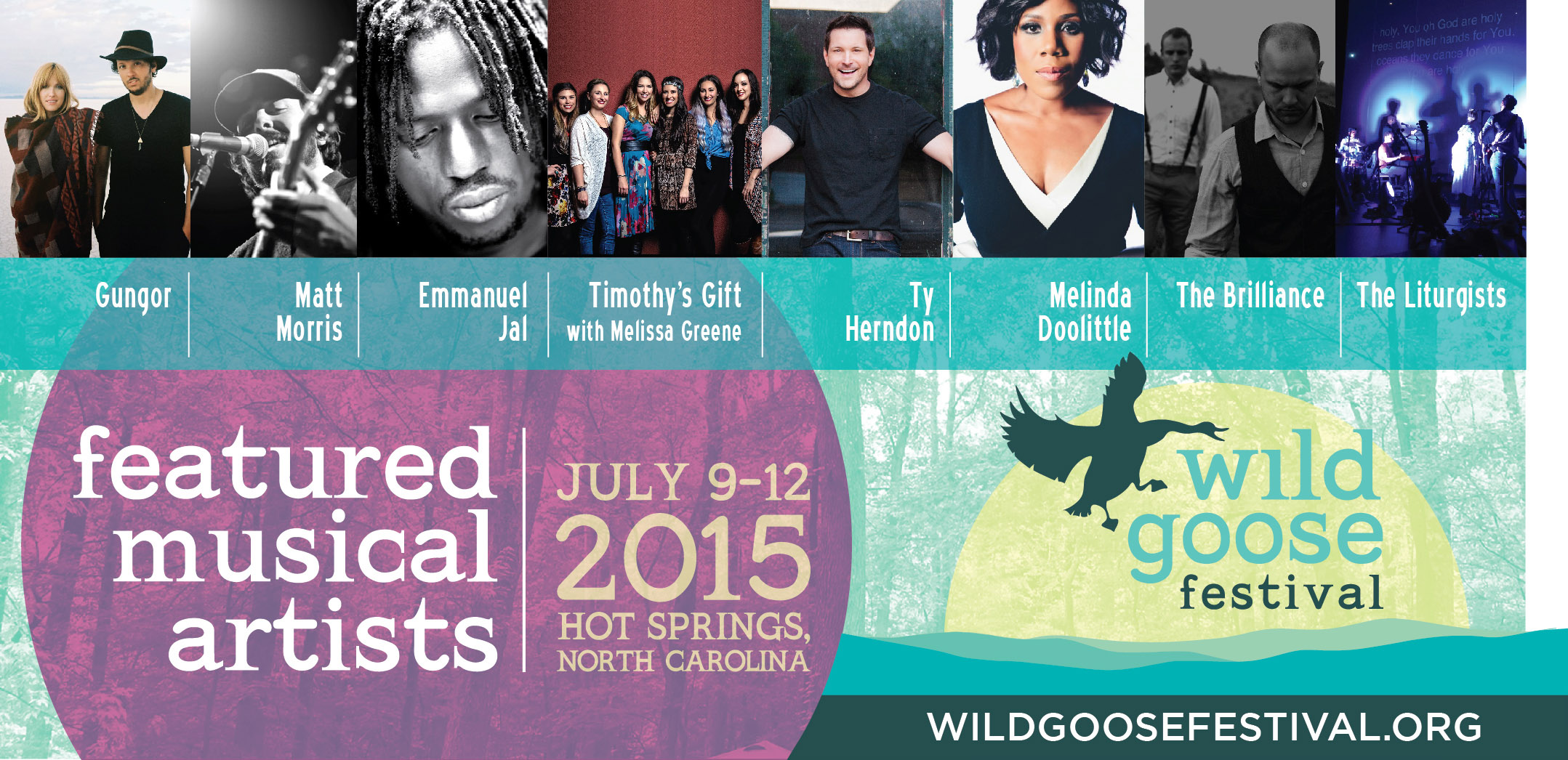
“Diversity, inclusion, gifting—musically, it’s an amazing line-up this year and it’s made more amazing by the fact that most of the performers are coming as a part of The Wild Goose community,” says Jeff. For example, in addition to their “on-stage” feature performer roles, you’ll also see Michael Gungor, Matt Morris, Emmanuel Jal, David Gungor, and others serving as worship leaders, speaking, and participating on panels. “This individual connection and commitment to the Wild Goose community is perhaps unprecedented,” he adds.
Jeff is deeply invested in this year’s music (he’s the 2015 music programming leader). Here are his top eight highlights for this year’s line-up!
1 & 2: EMMANUEL JAL & THE BRILLIANCE
“Emmanuel Jal’s “We Want Peace” and “Brother” from The Brilliance–are both powerful songs that are on my playlist daily.”
3: MATT MORRIS
“Like a lot of the Goose family I’ve been repeatedly viewing Matt Morris’ beautiful performance on Ellen (with Justin Timberlake backing him up).”
4 & 5: TIMOTHY’S GIFT & TY HERNDON
“The music of Timothy’s Gift, with our “own” Melissa Greene, is made even more powerful by the stories behind their work and Ty Herndon’s story is a deeply personal account of redemption and courage.”
6: LATE NIGHT MUSIC!
“We’re breaking the sound barrier! Sort of… we actually found a great way to have fun without breaking the Hot Springs, NC sound ordinance law. The Goose this year will have a Silent Disco (dance party with headphones) powered by SilentEvents, AcoustaGoose (a late night acoustic “jam” event with a different host band each evening), and Beer & Hymns on the schedule every night!”
7: WILD GOOSE FAVORITES & NEW PERFORMERS
“This year there will also be a lot Wild Goose favorites returning (including The Collection and Charles Pettee and FolkPsalm) and some wonderful new talent coming into the community.”
8: INTRODUCING THE CAFÉ
 “The Café should become a popular gathering place for refreshment and relaxation and will host performances from noon until 6 p.m. on Friday and Saturday. The on-site coffee shop setting, rather than local restaurants, may become the Goose living room for many.”
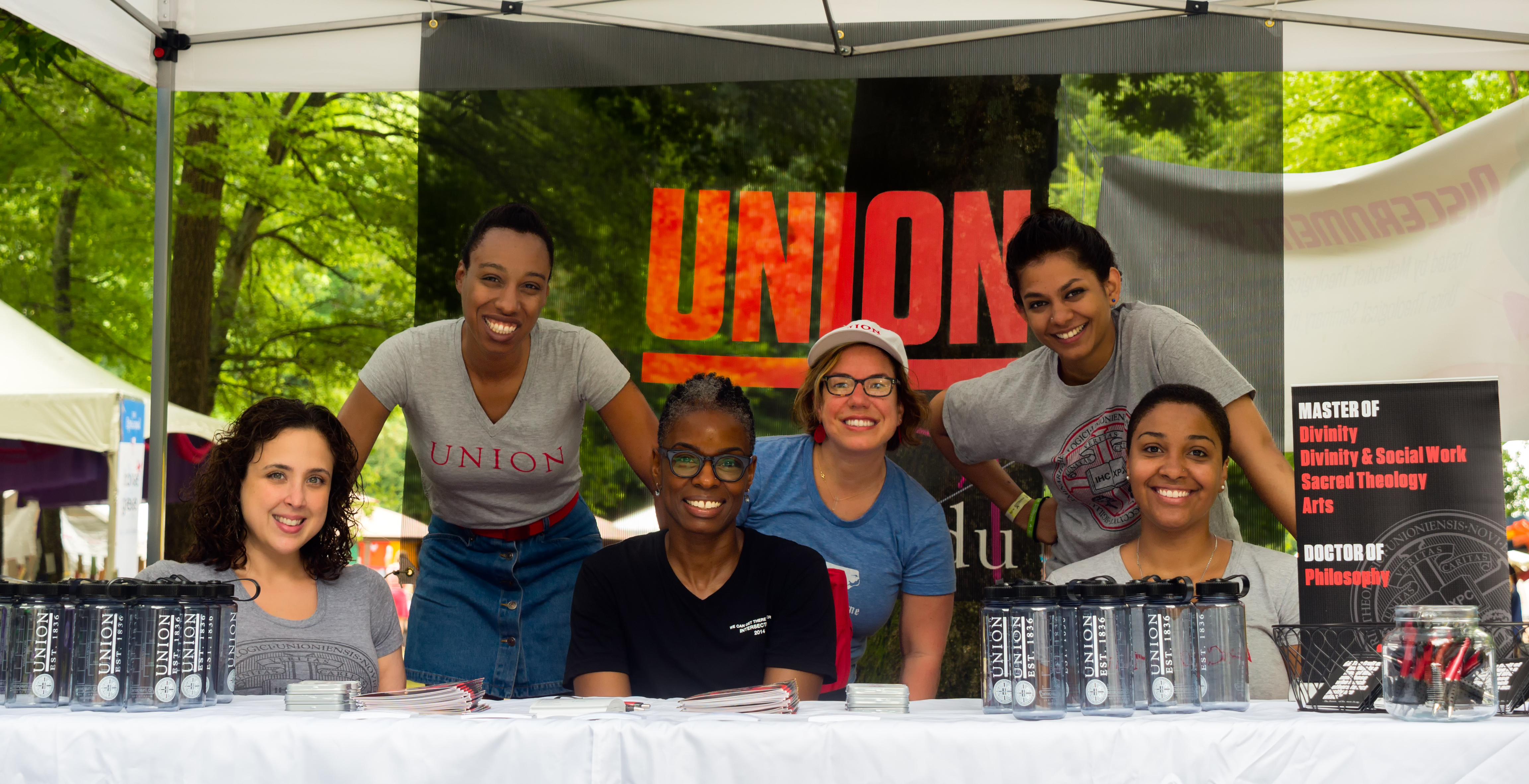
The Admissions Team at Union Theological Seminary in the City of New York is back again at the Goose. Last year we had such a great time greeting our fabulous alumni/ae and meeting prospective students that we couldn’t stay away!
The idea of theological education can be a big step. We are grateful to again be able to share our Union experiences as students and alumni/ae. We were also really moved to see folks from all over the country, and the world, connecting at our recruitment table. That we played a role in facilitating these surprising connections was a real highlight of our experience. And we are grateful.
At Wild Goose, there is no shortage of booths to visit and people to meet. Between the warm welcome from the people of Hot Springs, NC to the visiting community that’s built especially for this weekend, you’re sure to find something that piques your interest and feeds your passion. We hope that Union Theological Seminary can be on that list of inspirations.
So come and find us in the Spirituality Tent this year. Just look for the large “Union” banner. We will again have a team of folks ready to answer any questions you may have, from “what is seminary like,” to “how do you manage living in New York City?” and anything in between. And if you don’t have any questions, you are warmly invited to share some of your story, reminisce about Union, or simply say “hello.” We look forward to seeing you!
– The Admissions Team of Union Theological Seminary in the City of New York
[email protected]
Last year I was pleased to be at Wild Goose for the first time and to talk about my book Slow Church (co-written with John Pattison), and how the Slow Food movement and other burgeoning Slow movements might offer wisdom for us as we seek to cultivate community in the patient way of Jesus. One of the questions that I was asked at Wild Goose last summer was: “What is the meaning of Slow Church in situations that demand urgent responses: e.g., situations of deep injustice?” This question echoed through many of the conversations that I’ve had about Slow Church over the last year, especially in the wake of racial injustice in places like Ferguson, MO, Staten Island, NY, Baltimore and most recently McKinney, TX. The question was a central one in several conversations I had with my friend Brandon Wrencher (an African- American UMC pastor in rural NC). We decided to co-facilitate a conversation on this question at Wild Goose next month.
 A post of this sort is entirely too brief to tackle a question of this kind of significance. However, I do want to offer a couple of thoughts that I believe are vital to answering this question. My first thought in answering this question is that an essential part of what we are calling Slow Church is it is not enough simply to respond to crisis situations, but we must be ever attentive to how we respond. Or in other words, our means must fit the ends that we seek. In this regard, I am reminded how vital prayer vigils were to the Civil Rights movements, as a way of preparing marchers to bear witness non-violently to the sort of peace and justice for all humanity that we have been called to in Jesus. On a similar note, I recently heard Rev. Traci Blackmon, a UCC pastor and community leader in Ferguson, tell the story of an elder in that community who in the midst of the marching and the escalating tension between police and protestors would daily drive up to a parking lot near the protest zone, and set up tables of abundant food and serve whoever was hungry. This Eucharistic sort of story reminds us of the space that the table – and especially a table that is seen as the Lord’s Table, at which anyone is welcome – creates for getting to the basic roots of humanity (e.g., the need to eat) and for conversation in which we begin to know and trust others.
A second thought in response to this question is that we live in an interconnected creation. Deep injustice is never merely a problem to be fixed, but is interwoven in intricate ways with other forms of injustice. One of my favorite theologians, Dr. Willie James Jennings of Duke Divinity School, emphasizes, for instance, that the racial injustices that are on the front of many of our minds today, had their origin in the early modern era in the social, economic and ecological injustices of human disconnectedness from land and place.
This complex web of injustice that has given shape to modern life as we know it in the twenty-first century eludes easy solutions, and might even be so massive and deeply embedded in life as we know it to tempt many of us to give up hope. The hope that we need, and the hope that lies at the heart of Slow Church, is the possibility of an alternative community, a community that embedded in the struggles for justice, but one that that is oriented toward the hope of God’s reconciliation of all things in and through Jesus. Our fundamental call as churches is not to be networks of religious individuals, but rather to be communities rooted in our particular places that are seeking to offer an alternative to the rampant injustice of our age. We should walk alongside our neighbors who are having injustice heaped upon them, and lament these injustices with them, but our primary call as churches is to imagine and to begin to embody in our life together a social order that is defined by the conviction that God desires peace, justice and reconciliation for all humanity and all creation.
These thoughts, I realize, hardly begin to scratch the surface of the basic question of Christian faithfulness and the deep injustices of our world, and especially when our concepts of Christian faithfulness – as Willie Jennings and others have argued – have threads of injustice interwoven into them. And so, I challenge you not to lose hope in the face of overwhelming injustice, but to continually seek to embody an alternative community that is rooted in the person of Jesus, whose life, teaching, death and resurrection was the very epitome of peace and justice.
And I invite you to join with Brandon and myself as we host a conversation at Wild Goose about these essential and unavoidable questions.
C. Christopher (Chris) Smith is a part of the Englewood Christian Church community on the urban Near Eastside of Indianapolis and is senior editor of The Englewood Review of Books. The co-author of Slow Church: Cultivating Community in the Patient Way of Jesus (IVP Books, 2014), he is currently finalizing a new book entitled Reading for the Common Good: Toward the Flourishing of our Churches, our Neighborhoods and the World.

Phyllis Tickle is one of the reasons Wild Goose exists. Her enthusiasm and affirmations of this journey have called so many of us together, even to endure ticks and floods in the deep woods of North Carolina.
As many of you know, earlier this year Phyllis was diagnosed with Stage IV lung cancer. In her honor, we will be incorporating prayers from the pocket edition of The Divine Hours prayer book into the schedule of the festival.
The Divine Hours, edited by Phyllis, was the first major literary and liturgical reworking of the sixth-century Benedictine Rule of fixed-hour prayer.
 “For many years Phyllis has been one of my chief encouragers,” says Wild Goose Festival Producer Rosa Lee Harden. “ Although some didn’t even know she was there in the background, her words of wisdom led me to the Goose. We were all hoping that she would be able to be with us this year. Since her health will not allow that, we are bringing her to be with us through her work and our prayers.”
Tripp Hudgins is this year’s curator of liturgy at the Wild Goose Festival. He and festival attendee Chris Smith first thought of this way to honor Phyllis. (Read Chris’ review of The Divine Hours here.)
“Phyllis has long been an encouraging presence in my own spiritual life,” says Tripp. “Her resource, The Divine Hours, was yet one more bridge that she offered the chaotic ecumenical environment called Christianity. It is a great example of what she does so well: provide space for all to come together in prayer to discern how what was can also be reborn into what is now and what is next.”
We hope those prayers for her through the ‘hours’ of the Goose will send her strength and encouragement for her journey.
Festival attendees are encouraged to buy a copy to bring to the festival. You can purchase a hardcover copy here or download it to your Kindle.
During our four day pilgrimage at Hot Springs next month, we will have people praying through the day, everyday, using Phyllis’ prayer. We hope those prayers for her through the ‘hours’ of the Goose will send her strength and encouragement for her journey.
In the meantime, if you’d like to pay tribute to Phyllis now as a member of the Wild Goose community, you can do so here.
(Here is a snippet of Phyllis explaining why she loves Wild Goose.)
https://youtu.be/VhEE7SfI9kE?t=5m55s
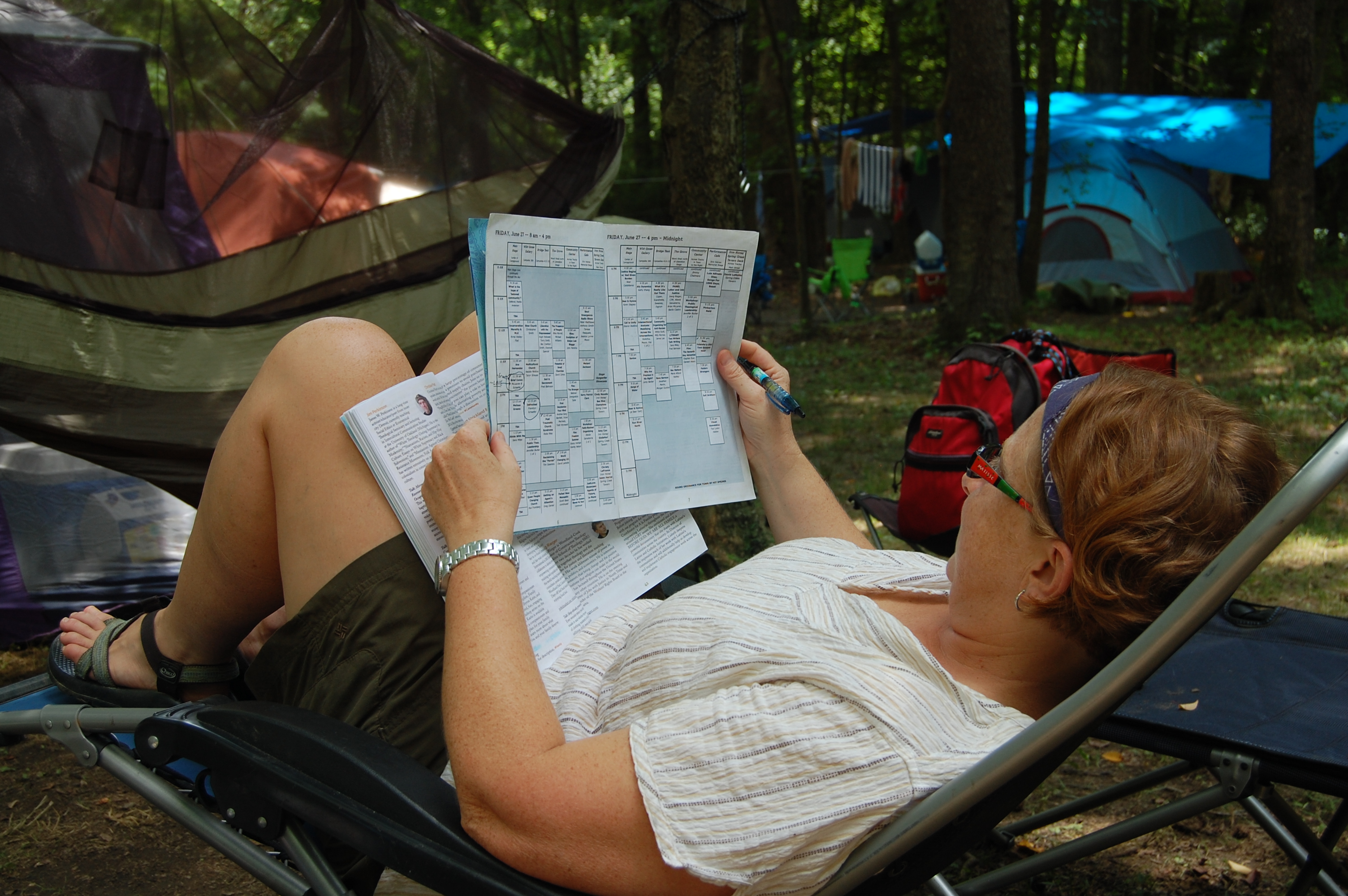
 Here it is, a preliminary draft of the 2015 Wild Goose Festival schedule!
We are excited to give you a sneak peek of Wild Goose Festival 2015. Musicians. Speakers. Storytellers. Performers. It’s all here. Just click on the links below to see schedules for each day of the festival.
Remember, this is only a draft schedule and there will be adjustments prior the the festival. No need to print and bring these drafts. The finalized schedule will be printed in this year’s program.
So, enjoy and safe travels to Hot Springs!
July 9: Thursday Draft Schedule
July 10: Friday Draft Schedule
July 11: Saturday Draft Schedule
July 12: Sunday Draft Schedule
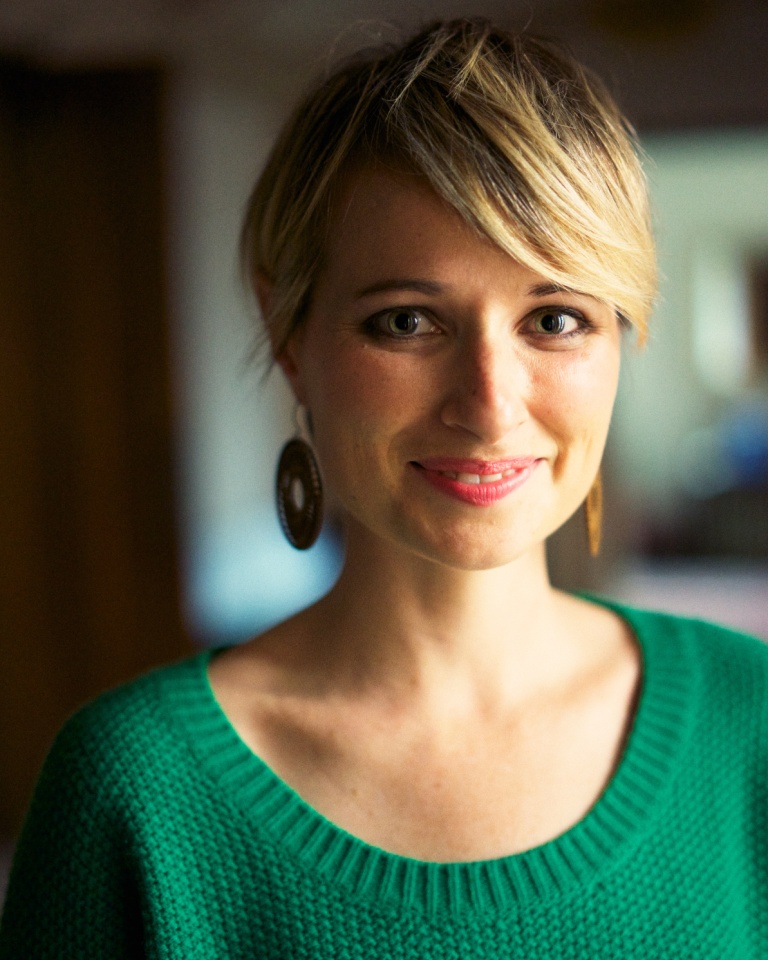
 Like all good anthropologists, I started research for my new book Lessons in Belonging from a Church-Going Commitment Phobe with a list of questions, not answers. Why is it so hard to belong to a local church? How do we know when we’ve found the one, and if there is no “one,” how do we make do with one that’s good enough? Can we really share flesh in Christ and not get eaten alive by one another? And when does a church go from being an imperfect one to a toxic one? Will we ever be able to make peace with a church that’s not a place of peace for all?
I am not a natural born peacemaker.
Although Erin means peace in Gaelic, I like to tell people my name is more aspirational than prophetic. At the age of five, I fought with the Catholic Church to receive my First Holy Communion two years early. At eight, as part of my parents’ divorce proceedings, I went before a Jewish arbitrator, argued, and lost my right to choose my own religion. At fourteen, I rebelled against the court orders and attended a non-demoninational church in which the Holy Spirit – and the handsome boys – set me aflame. When I married a Methodist pastor at age twenty-two, some friends worried I’d been domesticated. Four years later – and still happily married – I legally returned to my maiden name because his “just didn’t feel right.”
Making peace with the church and its people has been lifetime work for me. Despite my generation’s reputation for being a bunch of affiliation-averse, individualistically-inclined, spiritual-DIY-ers, I think many of us have struggled to make peace with the church not because we don’t care about this community of Christ-followers but because we care it’s done well – with excellence and creativity and accountability. The late poet John O’Donohue called this type of intense lover of the church the “artist.” We often think of artists as living on the edge of culture, the innovators and free thinkers, but O’Donohue described the artist this way: “He inhabits the tradition to such depth that he can feel it beat in his heart, but his tradition also makes him feel like a total stranger who can find for his longing no echo there.”
The artist makes her home not on the edge of culture but amidst her own near-constant heartbreak.
I have never been to the Wild Goose Festival before. But I suspect that among this group of faithful rebels, hearts are raw. I want to know about these hearts, the reckless hearts, the brave hearts, the skittish hearts, the open hearts. Author Parker Palmer points out that the word heart as its most ancient comes from the Latin cor and represents that hidden wholeness within each of us that holds together the intellectual, the emotional, the bodily, the imaginative, and all our ways of knowing. This heart stuff isn’t for the faint. If we want to be true peacemakers with the church and others, we must first make peace within our selves.
I don’t have answers for how exactly each one of us is called to do that. I’m hoping that’s what we can share and explore at the festival breakout session together. But I do know that each of us has a choice in how we will respond to our heartbreak. We can either let it take us out of the action in favor of a simpler life where we belong without question or question without belonging, or we can let it lead us into a more wholehearted life in which the contradictions of our faith open us to the death of illusions, the suffering of community, and the resurrection of our real selves as members of God’s household.
“Blessed are the peacemakers, for they will be called children of God.” – Matthew 5:9
Erin S. Lane is author of Lessons in Belonging from a Church-Going Commitment Phobe and co-editor of Talking Taboo: American Christian Women Get Frank about Faith. Confirmed Catholic, raised Charismatic, and married to a Methodist, she facilitates retreats for clergy and congregational leaders through the Center for Courage & Renewal. To find more of her writing, visit holyhellions.com.

From beer-and-hymn sings to best selling speakers, there is plenty of fun for adults at the Wild Goose Festival, but folks often want to know what the experience will be like for their kids.
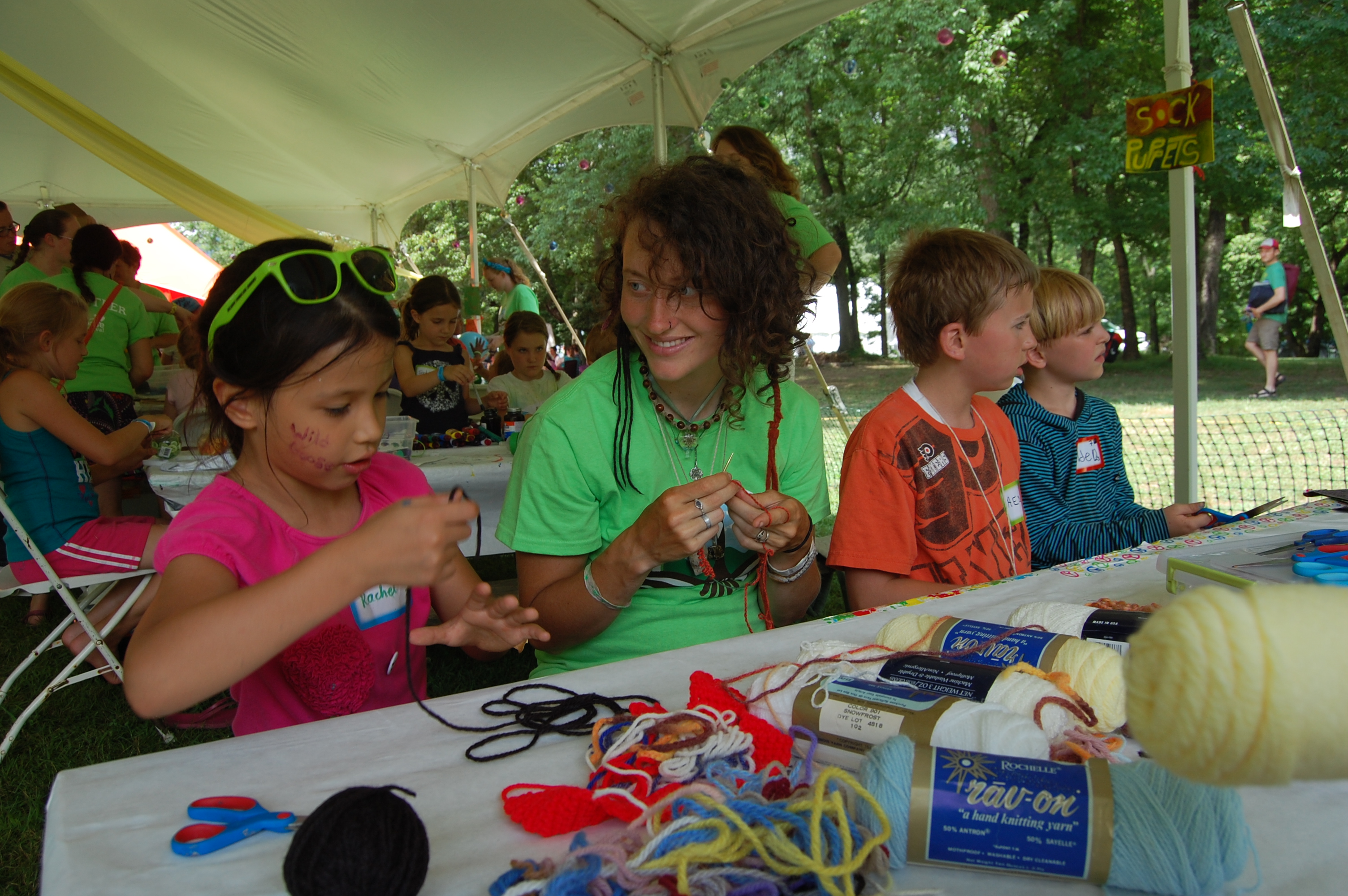
Being Creative At The Wild Goose Festival
Well, meet the curator of the kid experience at Wild Goose, Jamie Rye. He started developing the kids program when the Wild Goose Festival was just a twinkle in a handful of folks’ eyes over five years ago. He’s been growing and managing it as a programming volunteer ever since.
“In the kids tent our primary focus is around three things: belonging (community), creativity and safety,” explains Jamie. “In its simplest form we want kids to walk away feeling belonging, like they were able to uniquely express themselves, that they were safe and a part of the bigger story unfolding from God through the Goose.”
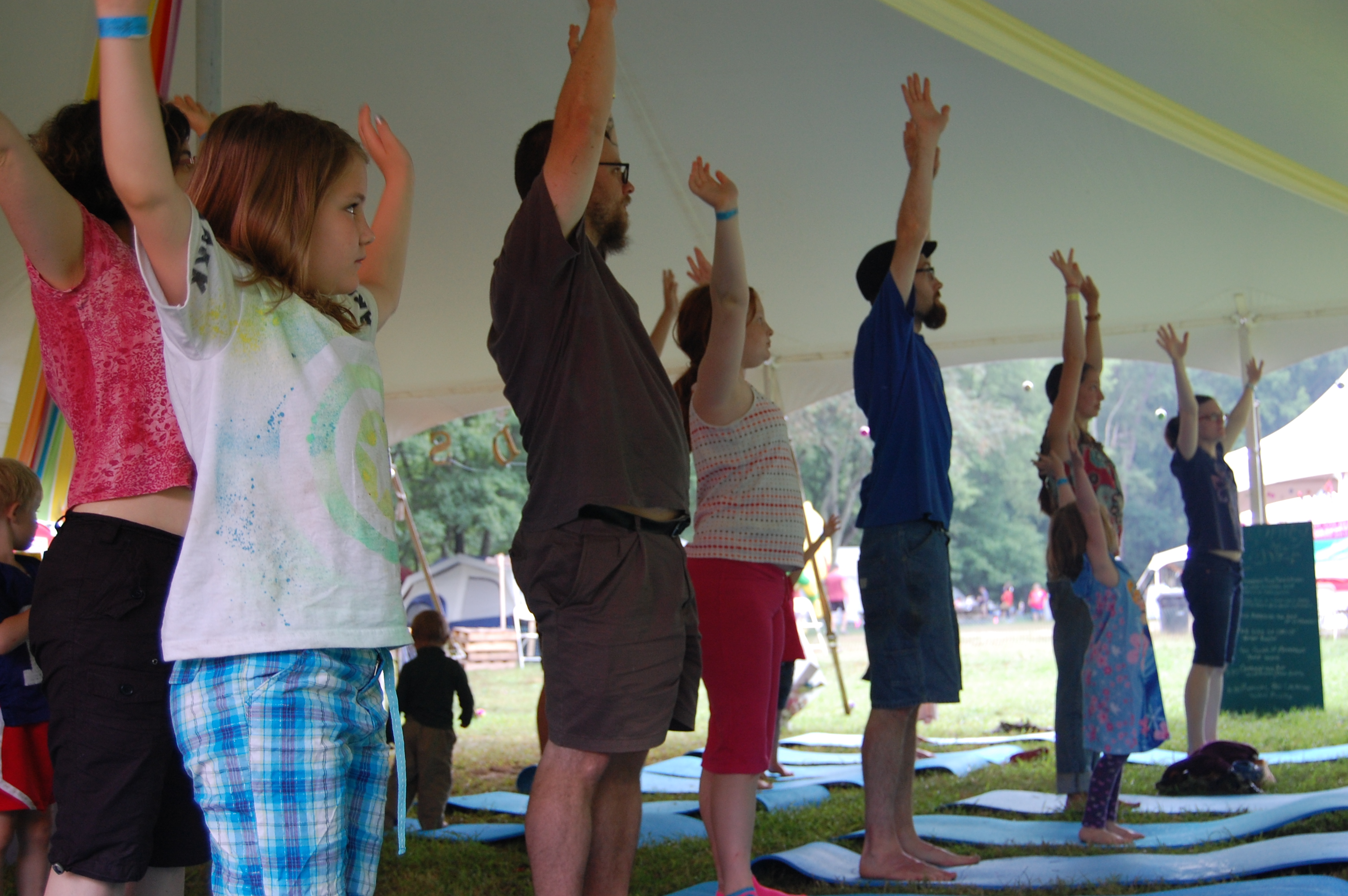 The kids program provides a two-hour session each morning and afternoon of the festival. Equipped with a secure check-in system, the program is designed by Jamie and his wife Kelly and facilitated by a team of volunteers, all of whom have received a background check.
Age appropriate activities are offered, with extra time to play in the nearby playground for children under the age of 6. But, the program is anything but a babysitting service. The kids will enjoy intentional Flock Groups, creative arts, creative storytelling and movement in music.
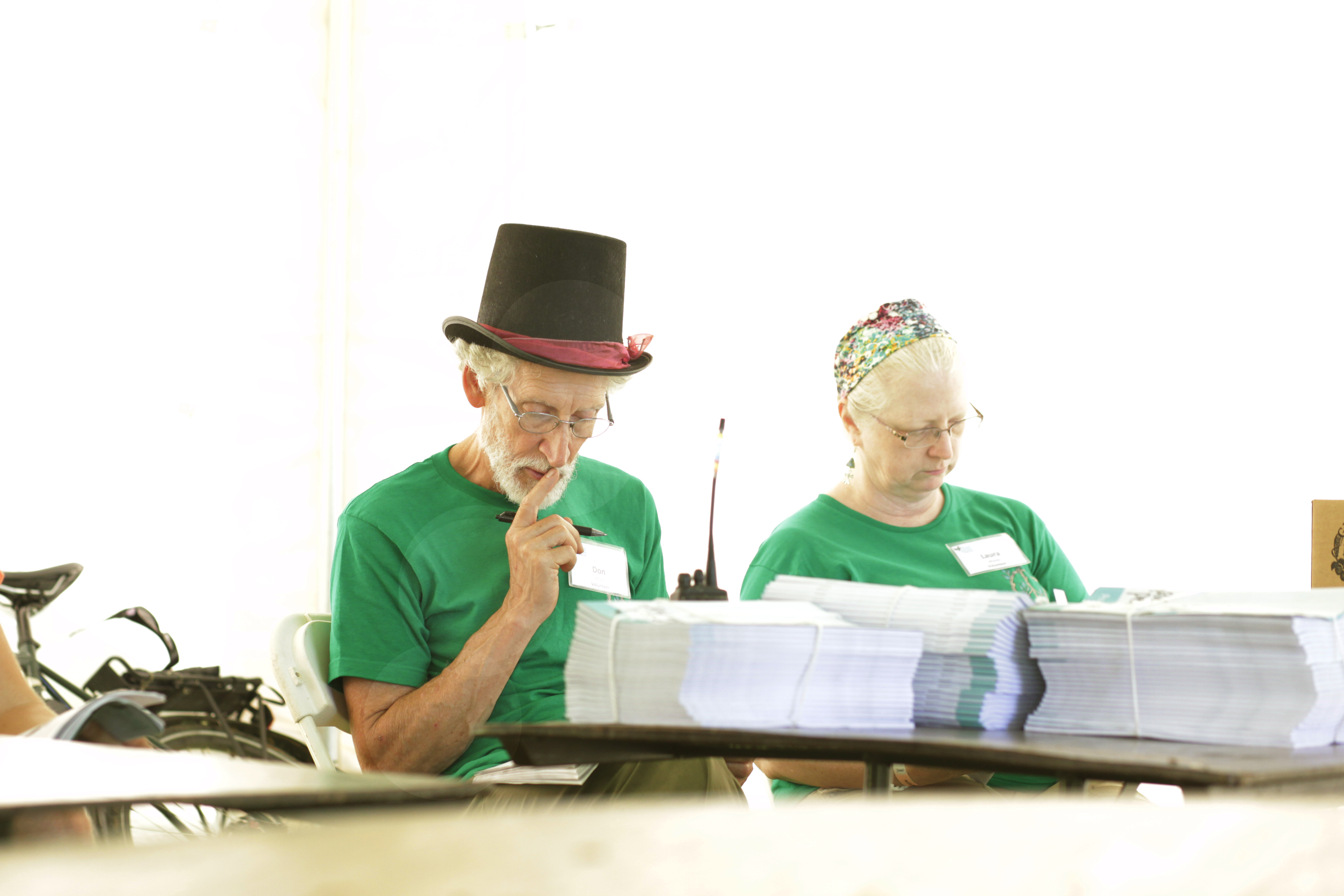
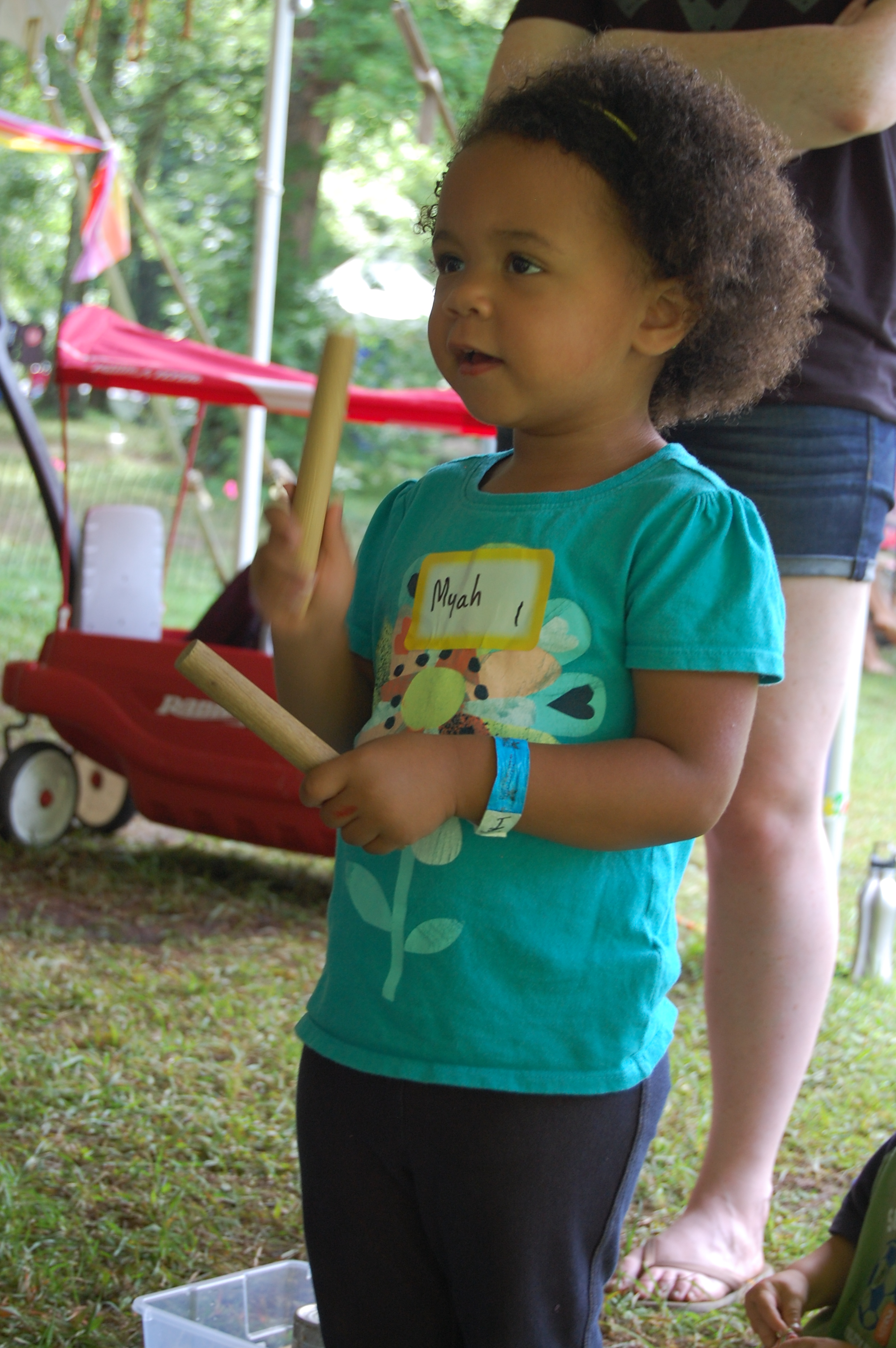 Jamie is emphatic that the program would not be complete without the help of his volunteers. “In all my years of doing Goose I have had incredible volunteers. These are folks that have given up vacation time, given up sleep, and suffered through the heat of the day to create an engaging, creative, intentional and safe place for kids.”
“Last year we had a hand full of volunteers who deeply loved kids and truly caught the vision for the kids space at the Goose,” Jamie continues. “The leadership team took ownership over the program and put in lots of hours not only in prep, but also on the ground. They worked so hard to welcome families. From providing supplies for the kids’ graffiti wall to running an amazingly fun creative-arts stations. The kids had fun, they were safe and they walked away from each session a little more creative, a little more valued and a little more loved.”
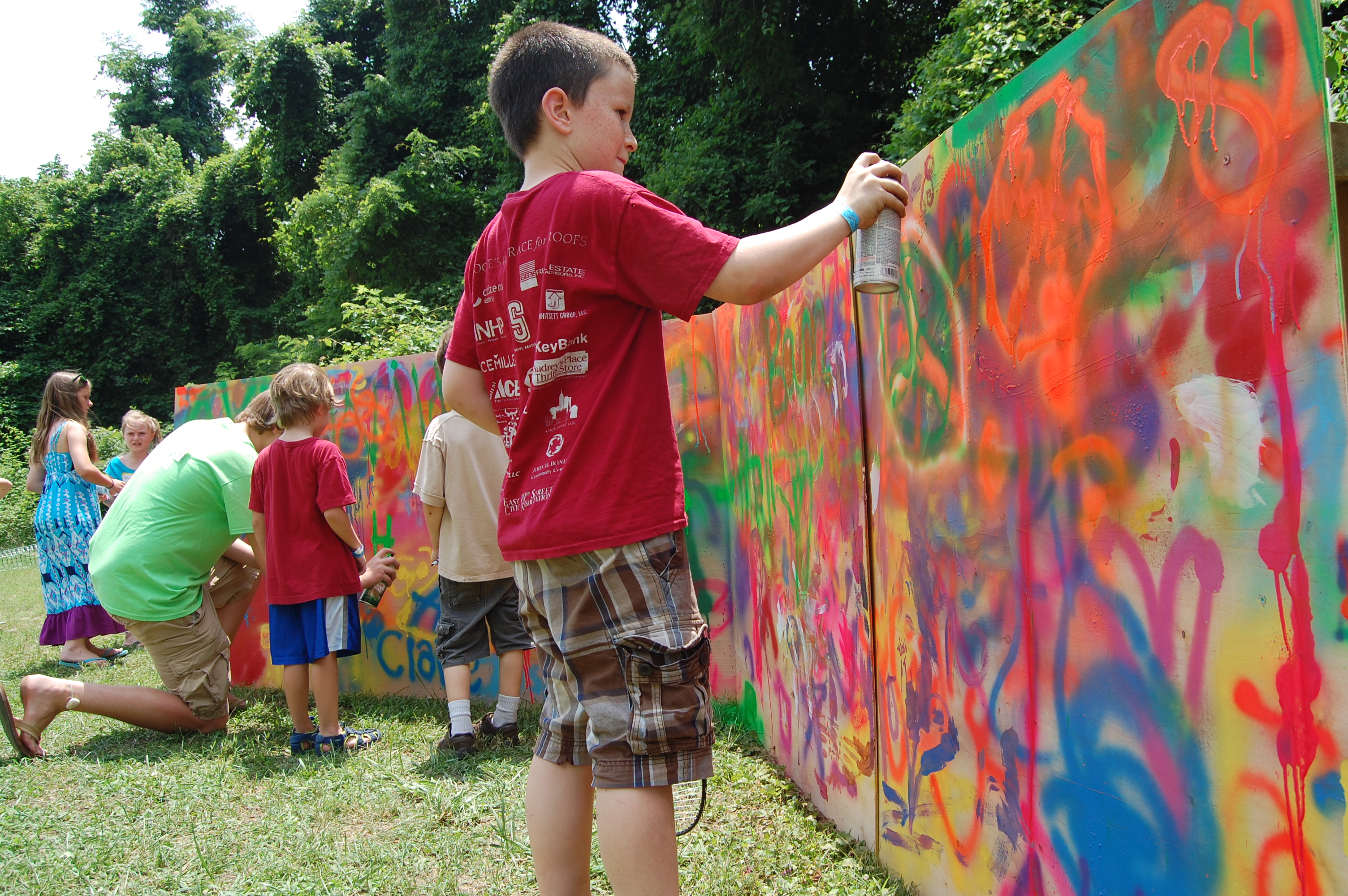 “Without volunteers like this the Goose kids couldn’t be what it has been over the last 5 years. I am honored to be surrounded and serve alongside such amazing people,” concludes Jamie.
He and his wife, Kelly, feel particularly drawn to Wild Goose: “Having been raised relatively-conservative evangelical we found that our progressive beliefs, ways of questioning and generous orthodoxy placed us on the outskirts of our subculture. Our lack of belonging was only amplified by the fact that I am a pastor in an evangelical denomination. The Goose brought us community, belonging and a safe place to embrace the good of our background and yet find space in a community that understood where we were coming from. I love that the Wild Goose creates the same safe space year after year for others like us.”
Jamie and Kelly Rye
Thanks to Jamie and his team, safety and creative learning are also available to children at the festival, while their parents have time to go do some exploring on their own.
This year promises another great batch of volunteers to run the kids program, says Jamie. “I am excited to watch them engage the kids and for the kids to respond with their natural expressive, wild, child-like abandon.
“Kids have the most fun at Goose, the adults should come and learn from them.”
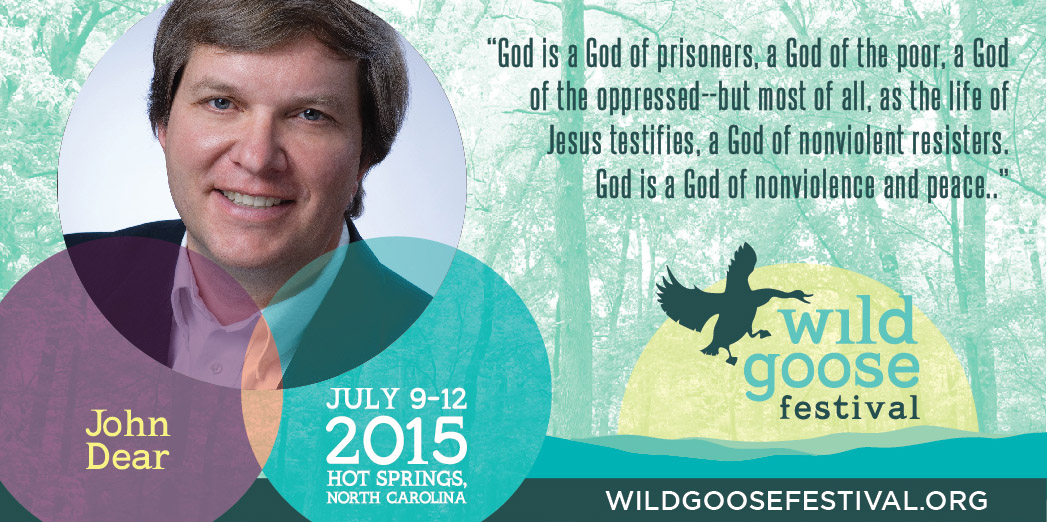
If you haven’t heard already, this year’s theme for Wild Goose is Blessed Are The Peacemakers. And, for one of our keynote speakers, that’s more than just a theory.
John Dear is a Catholic priest who has been arrested over 70 times in acts of civil disobedience against war. He spent eight months in prison for a Plowshares disarmament action and has been nominated by Archbishop Desmond Tutu for the Nobel Peace Prize.
This will be John’s fourth time at the festival; he’s only missed one festival on the east coast.
He loves meeting all the wonderful people that attend, says John. “Going gives me hope.”
This year, he is scheduled to be the morning keynote speaker. “I will reflect on Jesus as a peacemaker and the calling of any Christian to be a peacemaker,” he says.
For John, peacemaking is more than a good idea: it’s all encompassing. “We must make peace with ourselves,” he says, “and everyone we know, all creatures, the whole world. And we must join the global grassroots movement of nonviolence.”
Making peace is at the core of what it means to follow Jesus.
 “It’s not enough to just sit back, say your prayers and complain,” he says. “You have to get involved in the struggle to end war, poverty, nuclear weapons, and environmental destruction and put Gospel nonviolence into action.”
It’s a challenging message, but a challenge John believes Wild Goose, on its fifth anniversary, is ready to meet.
“If American Christians are going to become mature, they must become universal. That’s how peace begins,” says John. “We must move into Saint Paul’s vision of citizens of the Kingdom of God.”
“I expect people at Wild Goose Festival to not just listen, but prepare to go home after the festival and take action. To start working to change the church. We must actively work to create peace, otherwise the church may as well close up shop.”
Are you ready to start making peace?
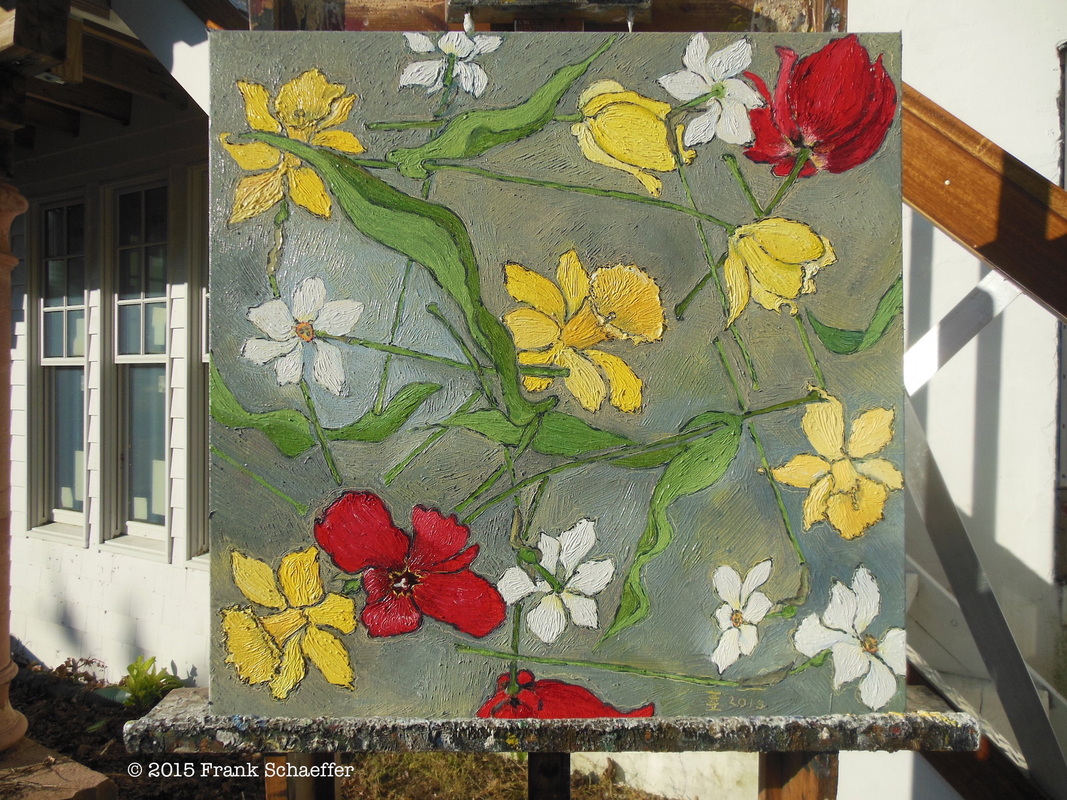
 To my Wild Goose Family:
Hi all. Here’s my Spring/Summer Wild Goose art show of NEW paintings. I’ll have some of these with me at Wild Goose 2015!
The theme is transcendent resurrection of the spirit. This revival of hope is open to all—atheist, believer and agnostic. I believe in beauty as the intrinsic truth. Here is my small new contribution to that truth.
My muses are my grandchildren, Amanda, Ben, Lucy, Jack and Nora. (By the way, Amanda will be with me at WG this year!) They are the lens through which death loses its sting for me. Painting is my expression of the peace I feel when I’m immersed in the lives I love best.
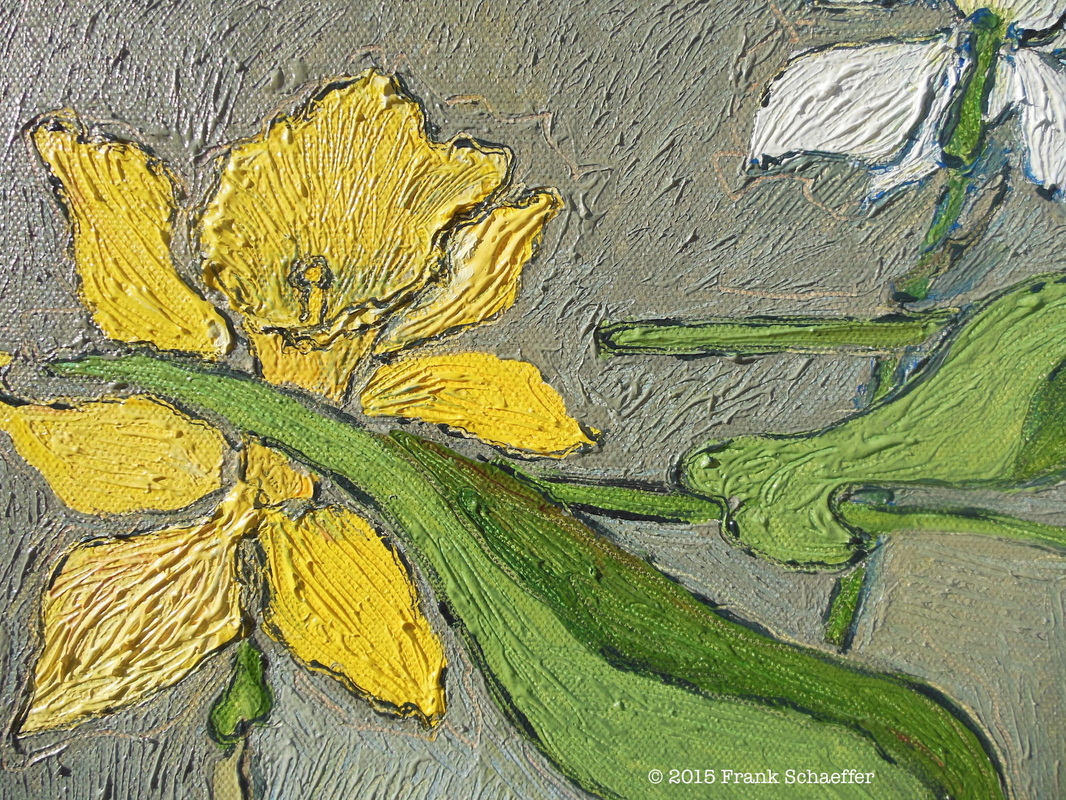
Detail from Daffodils, Tulips & Narcissus in a Storm
Thank you for taking the time to share these moments with me by looking at my work. I walk from my studio into the garden, pick a flower that was planted by my grandchildren (usually as a bulb the year before) and paint it. Really these are “portraits” of the moments of joy and grace I experience with the gifts of the children near and dear to me.
See you at WG!
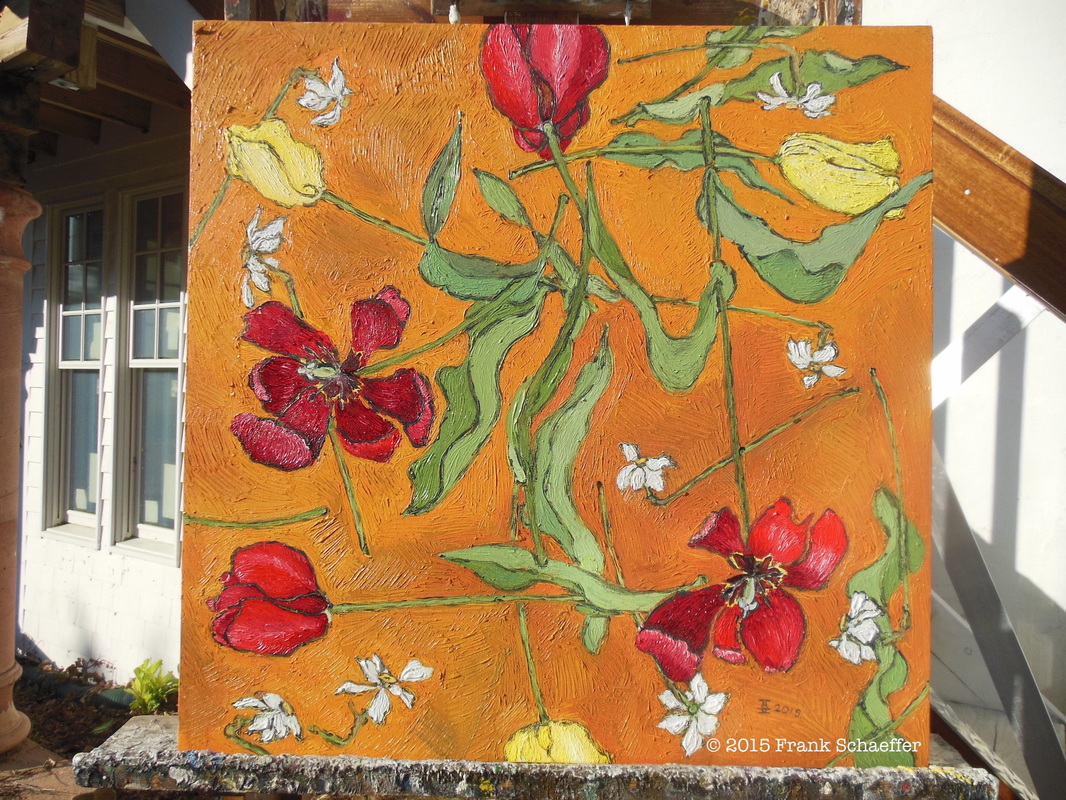

(See more of Frank’s work here.)
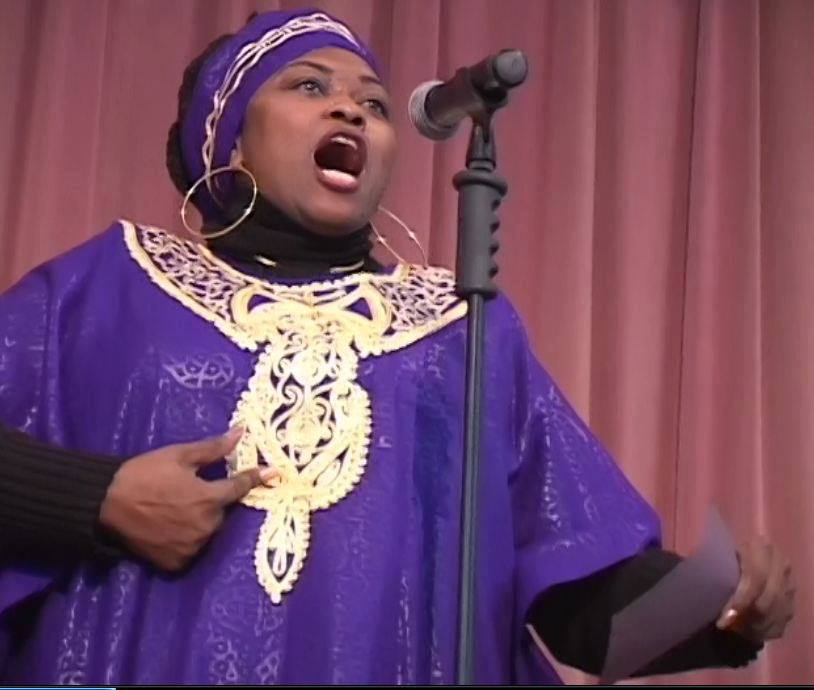
We’re pleased to present you more of the inspiring speakers/artists you can look forward to hearing from at this year’s festival. Read on to learn more about Yara Allen, Julie Clawson, Tony Kriz, Micky ScottBey Jones, Bec Cranford-Smith, Troy Bronsink, Sandhya Rani Jha and Rev. Yolanda!
 Yara Allen
Yara Allen is a seasoned cultural artist and longtime activist from Rocky Mount, NC. She is considered the “Theo-Musicologist” for the Forward Together Moral Movement. She performs movement songs that connect the cultural arts movement of today to movements of the past while integrating spoken word/poetry and the visual arts. Ms. Allen is also a Moral Monday arrestee and organizer with the NC NAACP. She is currently working on a manuscript for a book of social justice poetry.
 Julie Clawson
Julie Clawson is a mom, writer and former pastor who lives in Austin, TX with her two kids and two cats. Julie is a huge sci-fi/fantasy geek, wannabe foodie, theology nerd, social justice advocate and board game fan. She is the author of Everyday Justice: The Global Impact of Our Daily Choices (IVP) and The Hunger Games and the Gospel (Patheos Press).
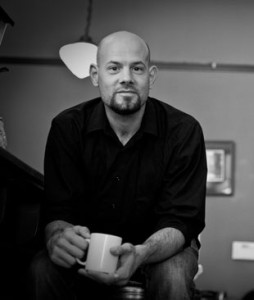 Tony Kriz
Tony is husband to Aimee, father to three courageous and creative boys, unofficial ambassador of his beloved Portland, devoted to his neighborhood, honored by his communal household, and a friend to the religious and irreligious alike. Tony is a neighborhood theologian who leads with personal confession, asking the questions that others are not willing to ask, and orchestrating epiphanies that surprise audiences. His honest writings, including his most recent book ALOOF, are helping people live an authentic faith.
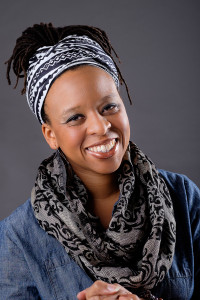 Micky ScottBey Jones
Micky ScottBey Jones is a “contemplivist” leader and organizer who hosts & facilitates conferences, trainings and online conversations, writes & speaks on a variety of topics including burnout, race & justice, theology from the margins, and curates contemplative spaces/activities. Recently named one of the “Black Christian Leaders Changing the World” in Huffington Post, Micky trains & encourages missional practitioners and faith-rooted activists through TransFORM Network as the Director of Training and Program Development.
 Bec Cranford-Smith
Bec self-identifies as a Bapticostal Misfit. She has been attempting to escape southern fried religiosity her whole life, but she really likes the Jesus guy and that Kenosis stuff. She works at one of Atlanta’s largest homeless service agencies as the volunteer guru and catch-all. Her favorite part of the job revolves around challenging stereotypes of homelessness and working with large groups of young people – mostly missions students.
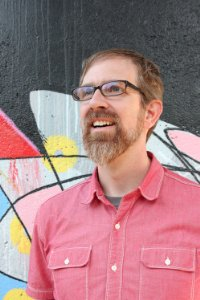 Troy Bronsink
Troy Bronsink leads retreats for creatives, social activists, and faith groups. He serves as Director of Outreach and Communication with Northminster Presbyterian Church. A singer-songwriter, he often speaks or plays music at camps and conferences, making the most of opportunities to build deeper collaborative relationships between creatives. His discussions of “Church as Art” grew into a discussion of “Life as Art”, which led to his book Drawn In: A Creative Process for Artists, Activists, and Jesus Followers.
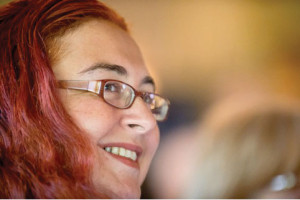 Sandhya Rani Jha
Sandhya Rani Jha serves as Director of the Oakland Peace Center, a collective of innovative non-profits working to create justice and peace in the city of Oakland and the Bay Area. Sandhya’s passion is liberation ethics as an academic field and as a lived experience in urban communities. She has published Room at the Table: Struggle for Unity and Equality in Disciples History, a book about people of color in the Christian Church (Disciples of Christ), and co-wrote (with Ben Bohren and Paula Bishop Pochieca) And Still We Rise, a congregational study of transformation. Sandhya is an anti-racism/anti-oppression trainer with the Disciples of Christ, a regular public speaker and preacher.
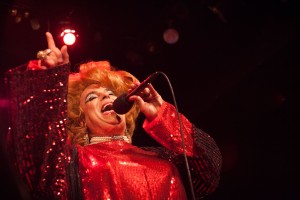 Rev. Yolanda
Born in Muscle Shoals Alabama, Rev. Yolanda has been performing as a drag queen singer songwriter and Radical Faerie for over 20 years with roots in Country Gospel music with a strong spiritual foundation. Rev. Yolanda’s music ministry is “Rev Yolanda’s Old Time Gospel Hour”. S/He brings a message of Non Duality into every event by merging GLBT and Mainstream Popular Culture with Integrated Spirituality. With a soulful voice, a message of oneness, great costumes, and a wicked sense of humor, his/her shows and CDs emphasize love, beautiful melodies, interesting stories, and a bit of inspiration.
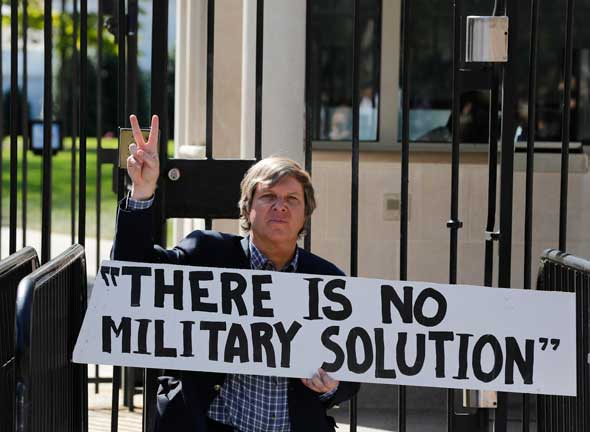
From Ferguson to Baltimore to Pakistan, upheaval, violence and injustice are shaking the world. In the midst of this turmoil, what does it mean to be a peacemaker?
This year, Wild Goose Festival goers will heed the call and fearlessly dive into that conversation with the theme Blessed Are The Peacemakers.
Please join us in welcoming John Dear, William Barber, Alexia Salvatierra, Robyn Henderson-Espinoza, Brian McLaren, Frank Schaeffer and Romal Tune as our Featured Speakers at Wild Goose 2015! Read on to find out more about these powerful peacemakers, who not only talk about peace, but also practice it!
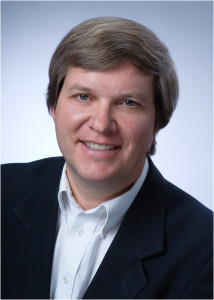 John Dear
John Dear a Catholic priest and internationally recognized voice for peace and nonviolence. He served for years as the director of the Fellowship of Reconciliation, the largest interfaith peace organization in the U.S. Author of The Nonviolent Life, Dear has been arrested over 75 times in acts of civil disobedience against war and was nominated for the Nobel Peace Prize by Archbishop Desmond Tutu.
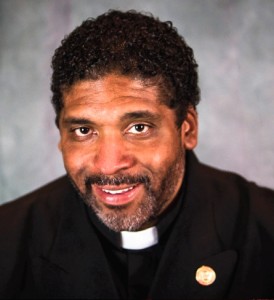
William Barber
William Barber is North Carolina NAACP president and organizer of the Moral Mondays movement. A full-time pastor at Greenleaf Christian Church, he’s volunteered countless hours to champion social change because he believes there is no worship without commitment to justice.
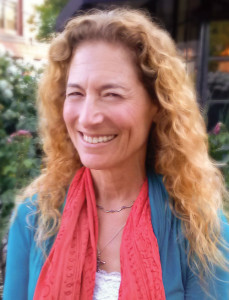 Alexia Salvatierra
Alexia Salvatierra is the author (along with Dr. Peter Heltzel) of Faith-Rooted Organizing: Mobilizing the Church in Service to the World and the founder of the Faith-Rooted Organizing UnNetwork. She is a Lutheran Pastor with over 35 years of experience in congregational and community ministry, and has been a national leader in the areas of working poverty and immigration, including the co-founding of the national Evangelical Immigration Table.
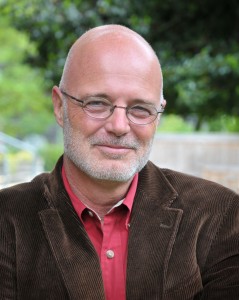 Brian McLaren
Brian D. McLaren is an author, speaker, activist, and networker among innovative Christian leaders. His dozen-plus books include A New Kind of Christianity, A Generous Orthodoxy, Naked Spirituality, Why Did Jesus, Moses, the Buddha, and Mohammed Cross the Road?, and We Make the Road by Walking. He is a senior fellow with Auburn Seminary, and a board member and leader in Convergence Network and Center for Progressive Renewal.
 Robyn Henderson-Espinoza
Robyn Henderson-Espinoza is a queer Latin@ who negotiates layers of agnosticism as their faith orientation. Believing that the ways of Jesus are tangible ways of enacting radical social change, Robyn strategically deploys theologies and ethics of radical difference to disrupt the hegemonic structures that reproduce multi-system oppressions. As an anti-oppression, anti-racist, Trans*gressive genderqueer, Robyn takes seriously their call as an activist theologian and ethicist to bridge together theories and practices that result in communities responding to pressing social concerns.
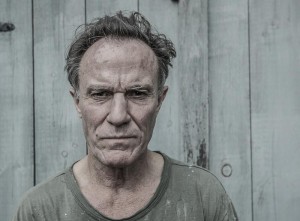 Frank Schaeffer
Frank Schaeffer is a New York Times bestselling author of both fiction and nonfiction, including Why I am an Atheist Who Believes in God. Frank is also an artist and prolific painter. The New York Times described Frank thus: “To millions of evangelical Christians, the Schaeffer name is royal, and Frank is the reluctant, wayward, traitorous prince. His crime is not financial profligacy, like some pastors’ sons, but turning his back on Christian conservatives.”
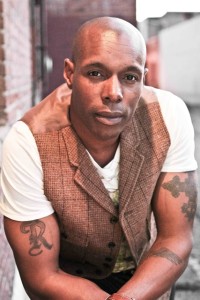 Romal Tune
Romal is the embodiment of living beyond the label. After overcoming the setbacks of his upbringing and the destructive choices of his youth, he is now a sought out communicator, community strategist, and education consultant. His platform, one of the most potent and rich stories of hope you’ll ever hear, is redemption. Since growing up in the trauma of poverty, violence, and the inner-city landscapes void of opportunity, he has triumphed to the heights of a Magna Cum Laude graduate of Howard University and Duke University School of Divinity, an ordained minister, and the author of an award-winning book entitled, God’s Graffiti: Inspiring Stories for Teens.
Reaching Further
by Kyle Meyaard-Schaap
Freedom. Joy. Flourishing.
These are some of the fundamental values that mark the identity of the Wild Goose Festival. The radical conviction that humans and the rest of creation were made to be in intimate, abundant relationship with each other and with their God. But it’s also the clear-eyed and gut-deep understanding that this life and this world falls short–that the intended abundant and intimate relationship always remains just out of reach. So why not gather in the forest for a few days every year and reach a little further?
That’s why World Renew is so excited to partner with Wild Goose 2015. Since its inception in 1964, World Renew has shared the conviction of Wild Goose that God envisions so much more for his creation. So much more than hunger and poverty. So much more than violence and oppression. So much more injustice and coercion. So much more than bondage, fear, and separation. That’s why, for the past 53 years, World Renew has been building relationships and walking alongside those who are in poverty. It has worked to do its own small part in bringing hope in the midst of despair, and freedom in the midst of captivity. To live in solidarity with those who are poor, that lessons might be learned from each other and a fuller vision of the kingdom might be caught.
Freedom. Joy. Flourishing.
These are some of the values that, like Wild Goose, also mark World Renew. And like Wild Goose, we too are painfully aware that this life and this world falls short–that the intended abundant and intimate relationship established at creation always remains just out of reach.
So why not gather in the forest for a few days in July and reach a little further?
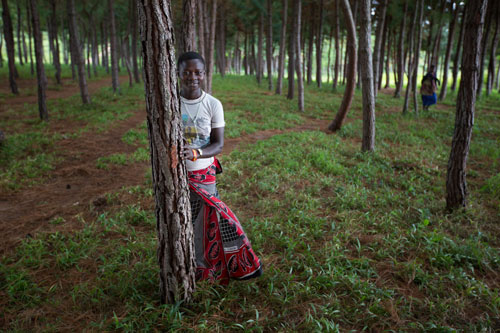
Salome stands among the pines of her father’s tree farm. World Renew’s local partner organisation, the Sengerema Informal Sector Association (SISA), taught Samwel and other farmers in his area how they can obtain title deeds for their land. With the ability to prove ownership of his land, Samwel has the security to be able to invest in it, especially because it can help in getting loans. He has chosen to plant these fast-growing pine trees which will give him massive returns when they are ultimately felled, and has since invested further money in starting a small business providing advice to other farmers. Without title deeds, farmers are vulnerable to having their land taken away from them, and they have no legal recourse for compensation. They are especially wary of this, now that gold has been found in the ground in several places and mining companies are keen to start operating here.

The Wild Goose Festival does not take flight on its own. Meet the team of who put the wind beneath its wings: calling speakers, arranging schedules, and generally making sure there are plenty of things for you to do when you arrive. These folks are more than fans of Wild Goose; they are fanatics.
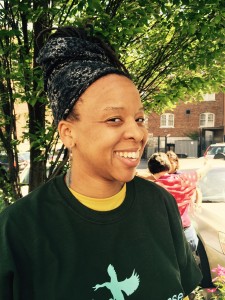
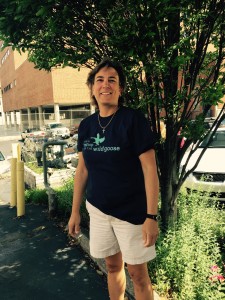
Focusing on spirituality, justice, art, music, youth and accessibility—this year’s programming team includes Cassie Barrett, Troy Bronsink, Whitney Brown, Jeff Clark, Carrie Craig, Micky ScottBey Jones, Holly Roach, Teresa Pasquale, Mary Wortas, and Holly Rankin Zaher.
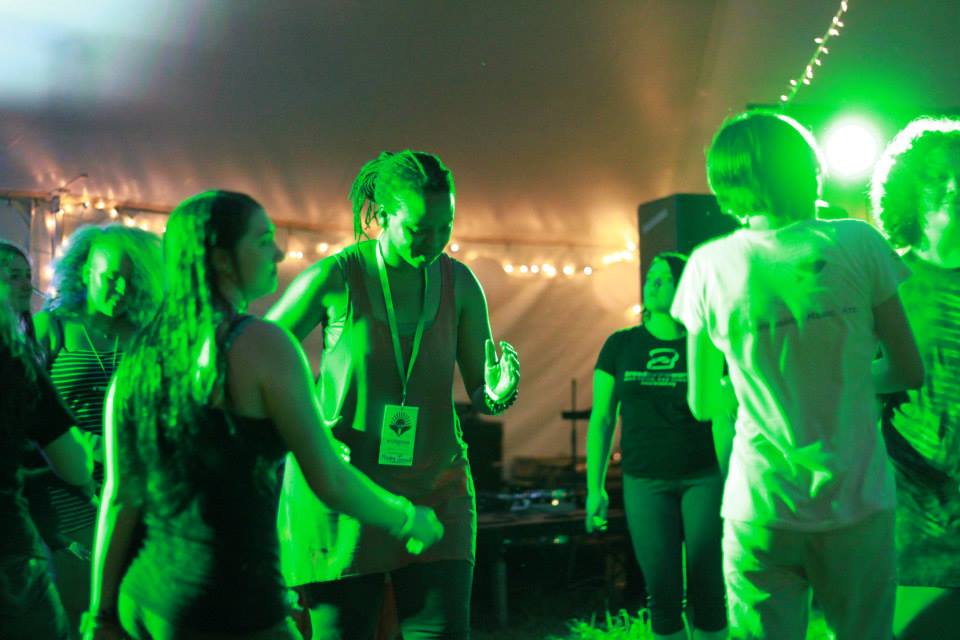
“I love the beautiful, messy, unpredictable, open space the Goose has created,” says Micky ScottBey Jones, co-curator of the justice track this year. “There are not many spaces curated by those claiming to be Christians that are really spaces of spiritual exploration, challenge, wrestling, and healing.”
-

- Cassie Barrett
-

- Troy Bronsink
-
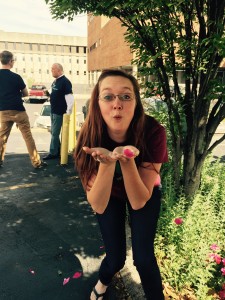
- Whitney Brown
-
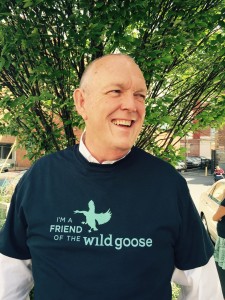
- Jeff Clark
-
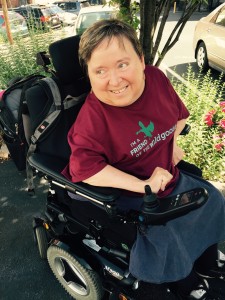
- Carrie Craig
-
- Micky ScottBey Jones
-
- Teresa Pasquale
-
- Mary Wortas
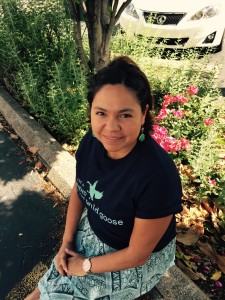
Teresa B Pasquale is co-curator for spirituality, focusing especially on healing and recovery. This will be her fourth year at the festival. For her, Wild Goose is a pilgrimage of sorts.
“For many people, myself included, it was like a finding a spiritual home.”
“For many people, myself included, it was like a finding a spiritual home,” says Teresa. “It was so richly layered and comforting in a way that didn’t exist where I came from and lived out in my daily life. I think the Goose is that safe space for many. As it grows and the community deepens, it also becomes the seedbed for amazing ideas, projects, programs, and partnerships. It truly is a sacred mountaintop and a pilgrim’s path.”
Micky Having Fun At Wild Goose
Carrie Craig, ADA coordinator for the festival, is on board to ensure that path is open to all. “I look forward to sharing the different ways we can be peacemakers this year,” says Carrie. “The timing is perfect. I am also excited about our musicians! They are going to bring diverse and creative ways to sing our prayers for peace.”
This year, Teresa is excited to hear Gungor and the Liturgists do, as she says, “what they do so well” in the Goose context.
“In terms of the spirituality tent, I am really glad we are going to delve into issues of war, peace, and conflict resolution in a deep and complex way—without simple dualistic, good-or-bad ideologies,” she says. “I am also glad we are continuing to layer in all the spaces interactive sacred practices and experiences for the festival attendees to not just see but be involved in bringing the festival alive.”
I love that my former-pastor, Marine-turned Buddhist Monk friend Bushi can lead a meditation session and my friend Holly Rankin-Zaher can facilitate a conversation on privilege with teenagers in the Youth tent and then a Beer & Hymns session starts up in the evening by the River, all in the same day!
Troy Bronsink, Director of Wild Goose Gallery, will help attendees do just that. This year, over a half-dozen art encounters will be sprinkled throughout the festival: weavers, painters, stations of the cross. This year Wild Goose will also be debuting an evening of short film. “It will be a great way to include this medium in the community we’re building through the goose,” says Troy.
Wild Goose is anything but static. It is growing and changing, from year to year and even from day to day.
As Micky points out, Wild Goose is unique. It is truly an open and safe place.
“I love that my former-pastor, Marine-turned Buddhist Monk friend Bushi can lead a meditation session and my friend Holly Rankin-Zaher can facilitate a conversation on privilege with teenagers in the Youth Tent and then a Beer & Hymns session starts up in the evening by the River, all in the same day!” she says. “It’s a beautiful embodiment of shalom in many ways. It’s not perfect. It’s still messy and requires a ton of grace, but it’s something.”
Wild Goose Programming Team
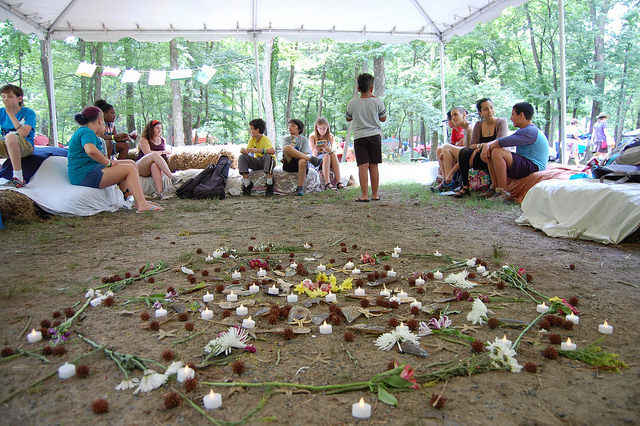

As a volunteer member of Wild Goose TV, under the leadership of Rick Meredith, you can expect to become part of a creative, memorable, and enriching experience! WGTV is the Wild Goose Festival’s online channel at YouTube devoted to informing and promoting the festival. During the event there’s a “booth” where attendees can share personal stories or quick comments about anything they choose. Rick and the crew are busy continuously staffing the booth or roaming the activities to capture some moments that matter for posterity.
For example: Here’s a piece created by the WGTV volunteer team.
WGTV needs experienced camera operators/videographers, video editors, interviewers, and production assistants!
WHAT WE’RE DOING
1. “What’s Your Story?” video booth: people are invited to step in and make a brief statement to the camera.
2. Roving video crew, (a camera person and a reporter/interviewer), who can roam the campground and pickup interviews with attendees.
3. General video coverage of anything and everything – Gathering shots that convey the flavor of the festival.
All of this will be going on constantly throughout the festival.
VOLUNTEERS NEEDED TO MAKE THIS HAPPEN
Experienced camera operators/videographers with a sense of composition and the ability to operate a camera smoothly. Preferably with your own camera, but we have some equipment you may be able to use.
Interviewers, reporter-types – Outgoing, think on your feet, not afraid to approach strangers and ask them questions. You will also be approaching passersby and talking them into making a brief statement in our video booth.
Production assistants – Helping out in many capacities, no experience necessary.
Contact Rick Meredith directly at [email protected]. Please include a short description of yourself and your video experience.